
What this track is about
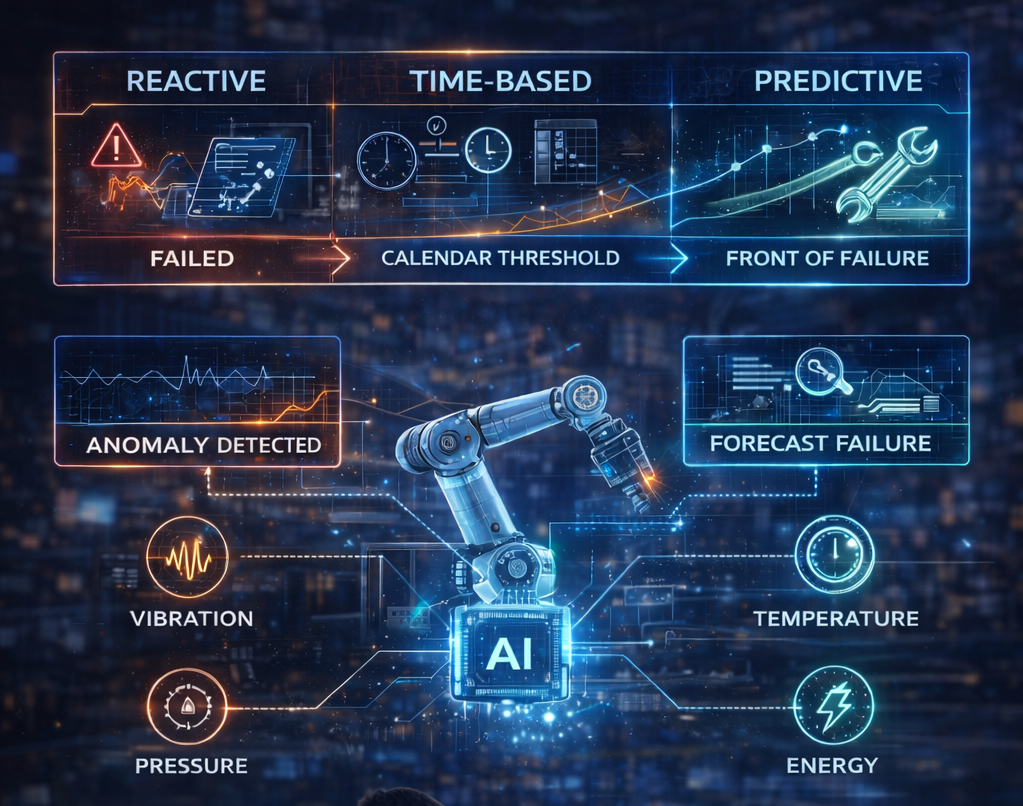
- Moving from reactive and time-based maintenance to condition-based and predictive strategies.
- Using IoT data (vibration, temperature, pressure, energy) plus AI to forecast failures before they hit your OEE.
- Turning your CMMS/EAM into a decision engine instead of a ticket graveyard.

What we work on inside the track
Identify high-impact assets, map failure modes, and define early warning signals. Build simple anomaly detection models that start with existing sensor data and grow over time.neuralconcept+2
How to catch weak signals: micro-changes in vibration, temperature spikes, or pressure drifts that precede failures.llumin+2 Setting thresholds, alerts, and workflows that your team can actually respond to.
Failure probability–based stocking strategies instead of gut feel. Using predicted remaining useful life (RUL) to time part orders and reduce inventory without increasing risk.oracle+1
Structuring asset hierarchies, failure codes, and work types so data is usable for AI.carl-software+1 Cleaning legacy CMMS data and setting up standards so every technician leaves better data behind.
Typical problems members bring
- We still maintain on OEM schedules, but breakdowns keep surprising us.
- We tried a vision project, but it struggled with lighting changes and product variants.
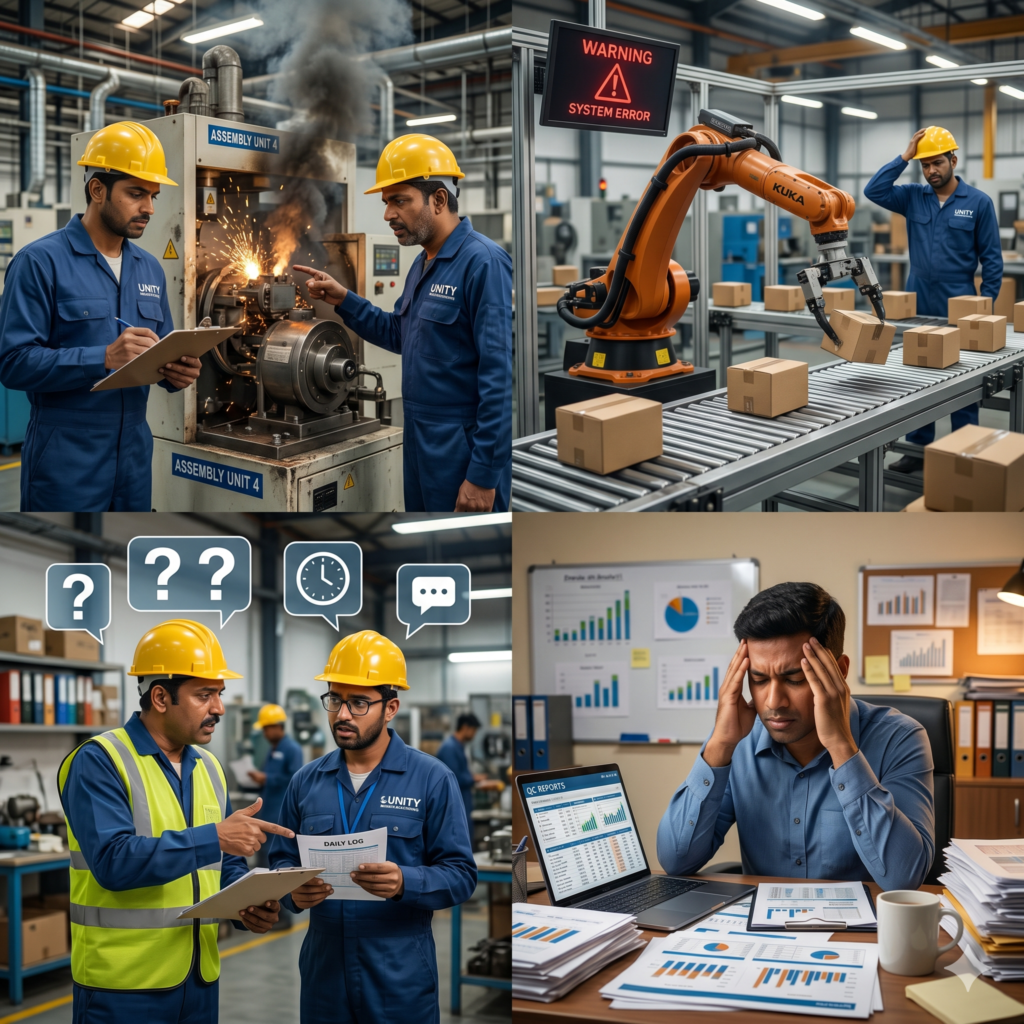
- Audits are painful; we can’t show end-to-end traceability quickly.
- Our data is scattered; doing proper root cause feels like detective work every time.


What you get by joining
Practical playbooks
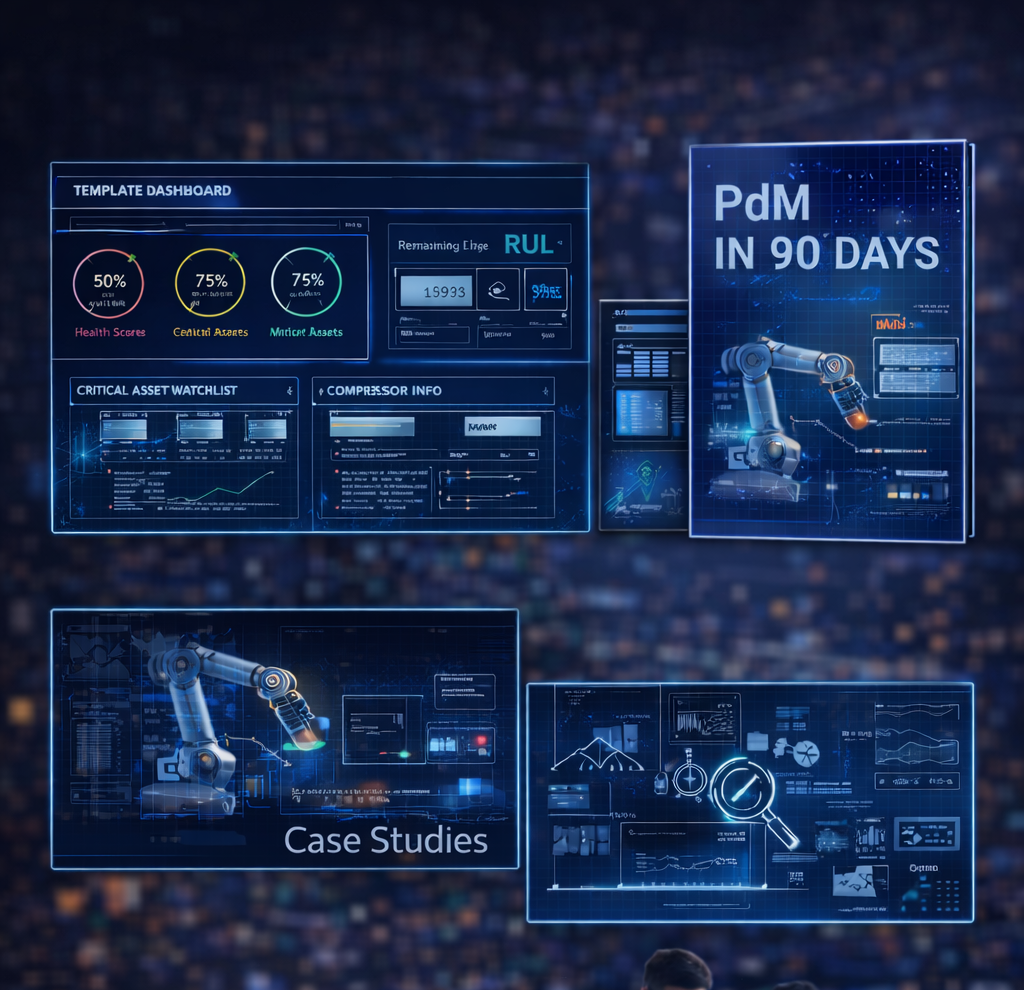
Step-by-step roadmap: “From Excel and breakdowns → to PdM pilot in 90 days.”
Template dashboards: health scores, RUL views, critical asset watchlists.
Peer-tested solutions
Real stories from plants that cut unplanned downtime and maintenance cost using AI-driven PdM.
Expert office hours
Bring your asset list and CMMS screenshots; the community helps you prioritize where AI will move the needle first.