
What this track is about
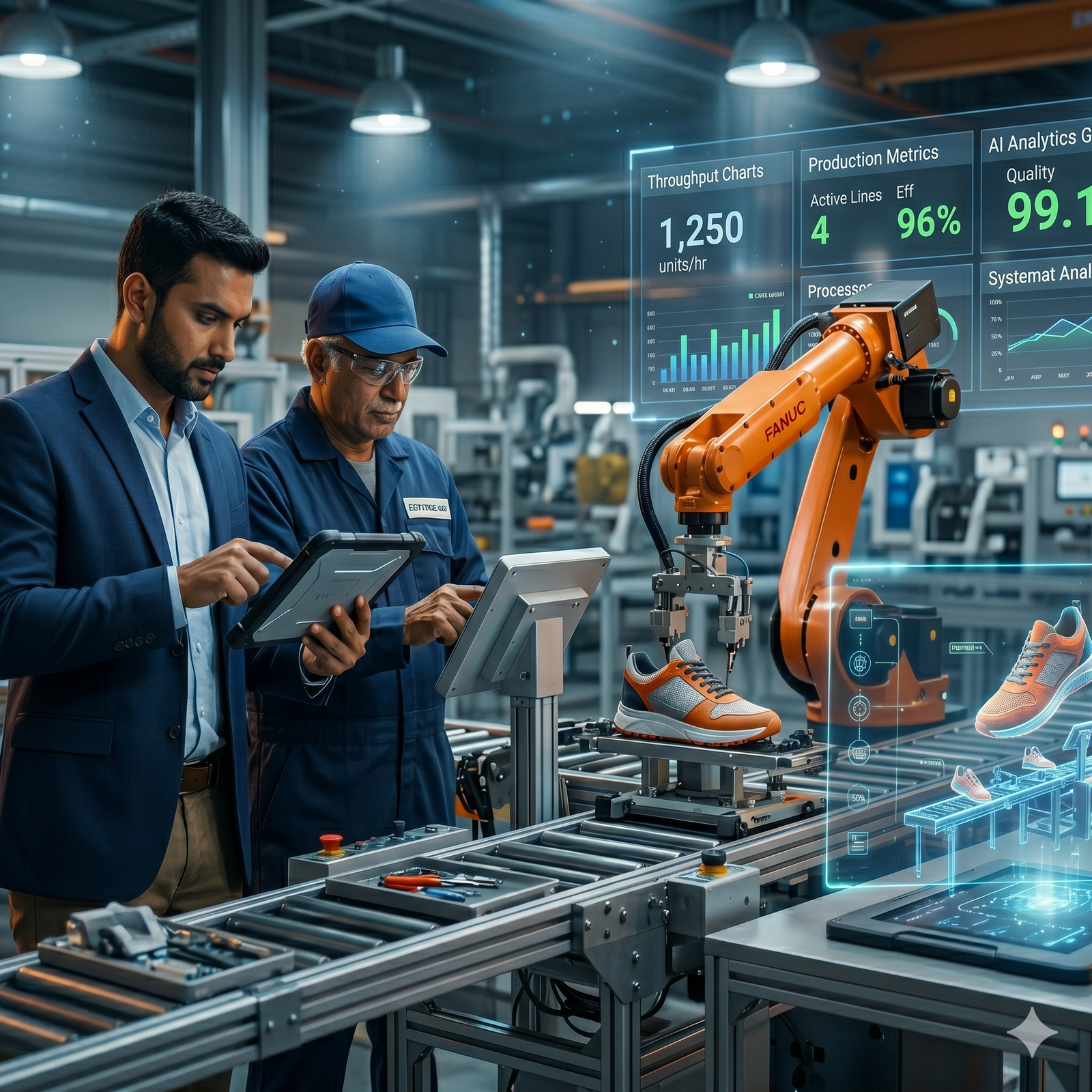
- Using data and AI to map and relieve bottlenecks, increase throughput, and stabilize cycle times.
- AI-driven production planning and scheduling that adapts to disruptions (machine downtime, changeovers, rush orders).
- Applying digital twins and simulations to test “what if we…” scenarios before touching the real line.
- Deploying robotics and cobots safely and ergonomically alongside operators.

What we work on inside the track
Identifying hidden constraints using AI on cycle times, micro-stops, and changeover data.sciencedirect+1 Experimenting with new rules (batching, sequencing, setup strategies) in a sandbox before going live.
AI-driven planning that considers constraints like machine capabilities, labor skills, maintenance windows, and material availability.nature+1 Scenario planning: “What if we add a shift?” “What if we consolidate SKUs?”
Building simplified digital twins that are accurate enough to test layout and parameter changes.eaj.ebujournals+1 Connecting twins to live data for continuous optimization.
Identifying tasks ideal for cobots: repetitive, ergonomic risk, high precision.nature+1 Lessons learned in safety, programming, and change management so operators embrace, not resist, robotics.
Typical problems members bring
- We need more output, but the capex for a new line isn’t approved.
- Schedules look great on paper but fall apart with every small disruption.
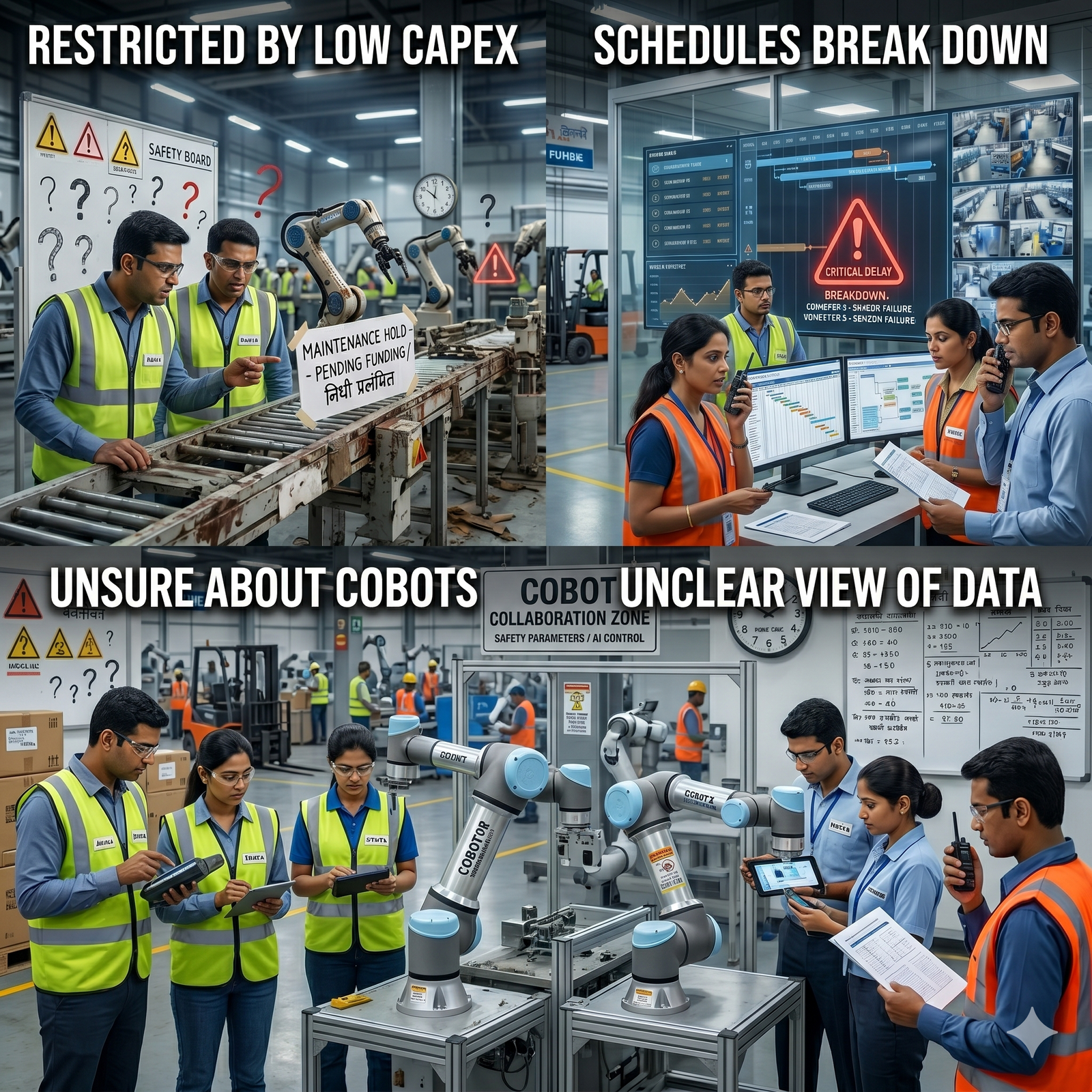
- We want cobots, but we’re unsure where to start and how to justify ROI.
- We have a sea of MES/PLC data, but no clear view of true bottlenecks


What you get by joining
Proven playbooks
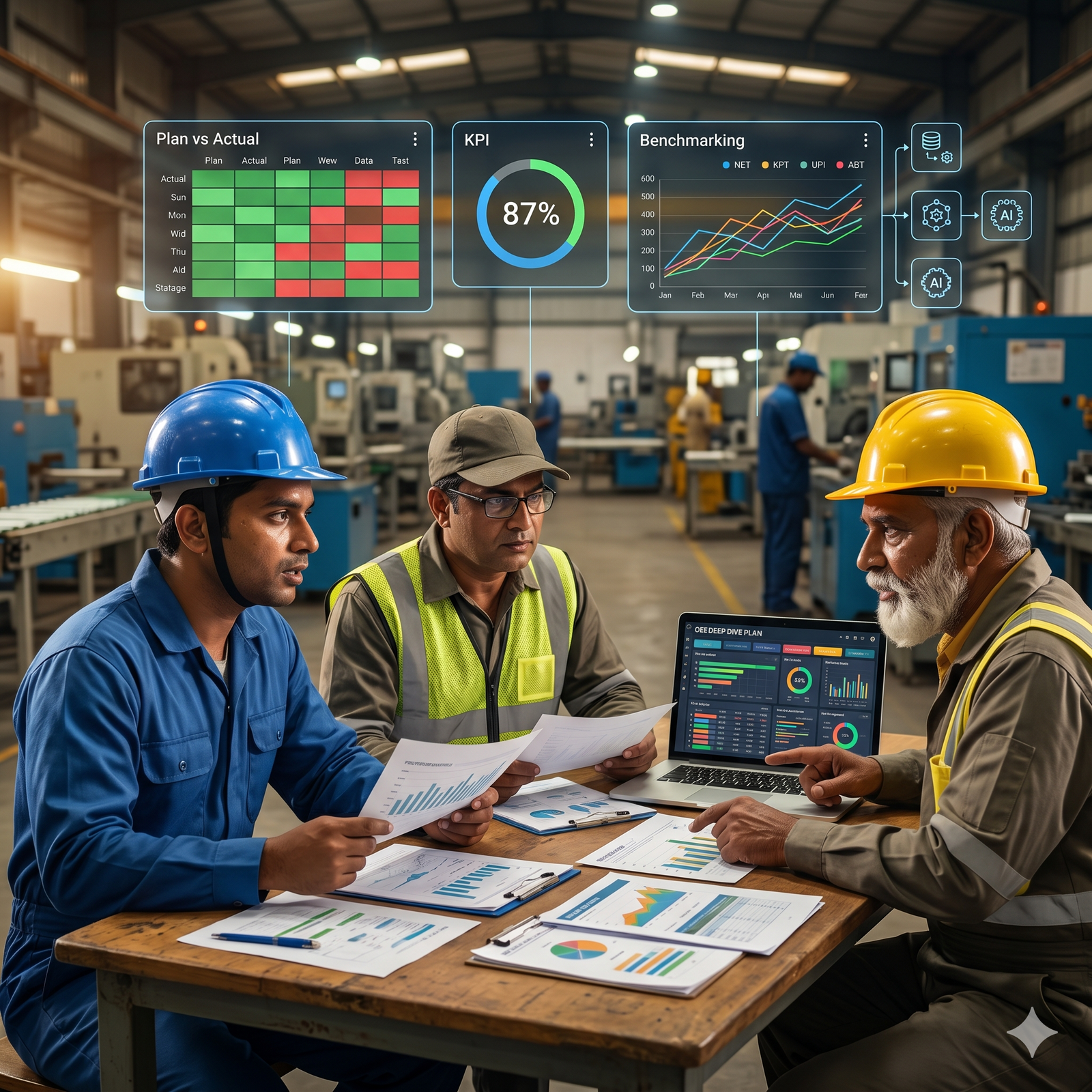
Templates to run an “OEE deep dive” week and walk away with a concrete improvement plan.
Benchmarking and peer numbers
Learn what “good” looks like for changeover times, OEE levels, and schedule adherence in similar environments.
Co-created experiments
Share your line data structure (not confidential data) and get peer suggestions on where to test AI first.