
Quality is a make-or-break factor for Indian manufacturers. Whether competing in domestic markets or targeting exports to Europe, USA, and Japan, consistent product quality determines reputation, customer retention, and profitability.
However, many Indian factories still face high rejection rates, rework costs, and customer complaints due to manual inspection limitations and process variations. According to industry estimates, poor quality costs Indian manufacturers 2–5% of annual revenue on average – sometimes even higher in sectors like auto components, electronics, and pharmaceuticals.
The solution lies in smart tools powered by AI, machine vision, IoT, and analytics. Here are the most common quality challenges and 5 practical steps smart tools can help you overcome them.
Common Quality Issues in Indian Manufacturing
- Inconsistent raw material and supplier quality
- Human error and fatigue in manual inspection
- Process parameter variations leading to defects
- Limited real-time detection of quality issues
- Poor traceability from raw material to finished goods
- High rework and scrap rates
- Difficulty meeting stringent international quality standards
5 Steps Smart Tools Can Improve Quality
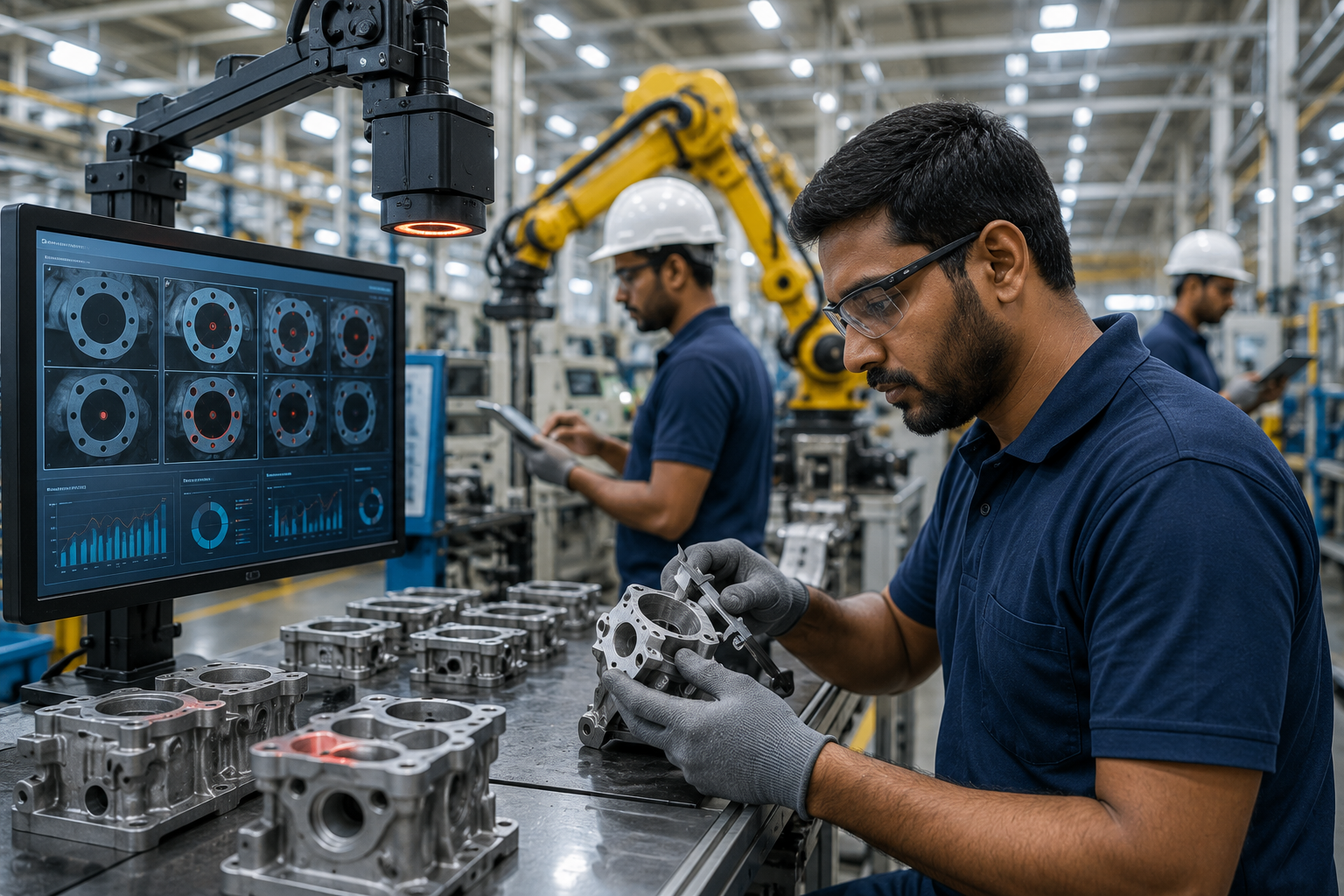
1. Implement AI-Powered Visual Inspection Systems
Manual inspection is slow, subjective, and inconsistent, especially during high-volume shifts.
Smart machine vision systems combined with AI can detect surface defects, dimensional variations, and assembly errors with over 95% accuracy at high speed.
Benefits:
- 24/7 consistent inspection
- Reduces human dependency
- Catches defects early in the process
Many Indian auto and consumer goods manufacturers have reduced rejection rates by 40–70% using AI vision systems.
2. Deploy Real-Time Process Monitoring with IoT Sensors
Quality issues often arise due to uncontrolled process parameters (temperature, pressure, humidity, vibration, etc.).
IoT sensors feed live data into intelligent platforms that alert supervisors the moment parameters drift beyond acceptable limits.
Impact:
- Prevents defects before they occur
- Reduces process variation
- Enables data-driven process control
3. Use Predictive Quality Analytics
Instead of reacting to defects after they happen, smart analytics predict potential quality failures by analyzing historical and real-time data.
How it works:
- Identifies patterns leading to defects
- Predicts which batches or machines are likely to produce non-conforming parts
- Suggests corrective actions automatically
This proactive approach significantly lowers scrap and rework costs.
4. Enable End-to-End Digital Traceability
Traceability is critical for recalls, compliance, and root cause analysis.
Blockchain + IoT solutions create a digital thread from supplier raw material to finished product, making it easy to track and verify quality at every stage.
Advantages:
- Faster root cause identification
- Better supplier quality management
- Easier compliance with standards like IATF 16949, ISO, and export requirements
5. Automate Data Collection and Root Cause Analysis
Manual data entry is error-prone and time-consuming. Smart quality management systems automatically capture data from machines, inspections, and tests, then use AI to perform root cause analysis.
Results:
- Faster corrective and preventive actions (CAPA)
- Continuous quality improvement
- Knowledge captured and shared across shifts and plants
Conclusion: Quality as a Competitive Advantage
Indian manufacturing is moving from “acceptable quality” to “world-class quality.” Smart tools under the Quality & Inspection track are making this transition faster, cheaper, and more reliable.
By adopting these intelligent solutions, manufacturers can reduce defects, lower costs, improve customer satisfaction, and strengthen their position in global value chains.
manAIhub is built to support Indian manufacturers on this journey – connecting Quality Heads, Engineers, and Plant Leaders with practical use cases, solution providers, and implementation guidance tailored to Indian factory realities.
Ready to Elevate Your Quality Standards?
Start small. Pick one pain area (incoming inspection, in-process quality, or final inspection) and explore smart tools that deliver quick results.
What is your biggest quality challenge today?
Share in the comments or join the manAIhub community to connect with experts and peers facing similar issues.