
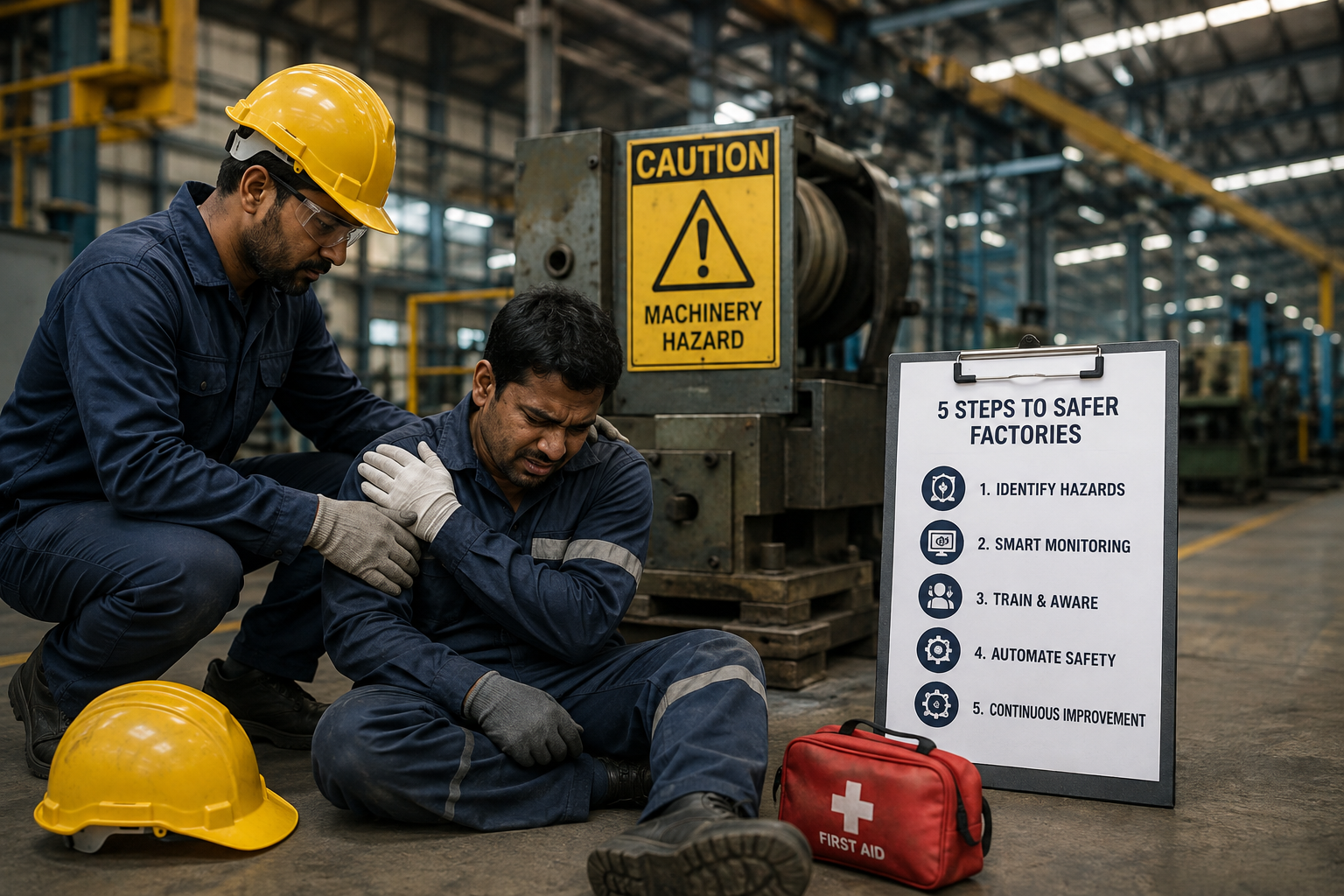
Workplace safety remains a critical concern in Indian manufacturing. Despite progress in regulations and awareness, many factories still face accidents related to machinery, material handling, electrical hazards, fire, and human error. Every incident not only causes human suffering but also leads to production loss, legal issues, compensation costs, and damage to the company’s reputation.
In older plants and high-risk industries, safety often depends heavily on manual supervision, training, and worker vigilance — methods that are not always reliable under pressure or during long shifts. Smart systems powered by AI, IoT, computer vision, and real-time analytics are now helping factories move from reactive safety management to proactive and preventive safety. These solutions are becoming an important part of Workforce Augmentation and overall smart manufacturing.
Here are the common workplace safety issues in Indian factories and 5 practical steps smart systems can take to make the workplace safer.
Common Workplace Safety Issues in Indian Factories
● Machine-related accidents (entanglement, crushing, cutting)
● Slip, trip, and fall incidents
● Poor compliance with Personal Protective Equipment (PPE)
● Electrical and fire hazards
● Material handling and lifting injuries
● Lack of real-time monitoring in high-risk zones
● Insufficient near-miss reporting and analysis
● Fatigue and human error during long shifts
These risks are higher in plants with older equipment, high workforce turnover, and limited digital supervision.
5 Steps Smart Systems Can Make Factories Safer
- AI-Powered Computer Vision for Real-Time Safety Monitoring
Smart cameras combined with AI can continuously monitor the shop floor for unsafe behaviours and conditions.
What it detects:
● Workers not wearing helmets, gloves, or safety shoes
● People entering restricted or hazardous zones
● Unsafe proximity to running machines
● Smoke, fire, or unusual movement patterns
Benefits: Instant alerts to supervisors, reduced dependency on manual supervision, and
stronger safety culture through consistent monitoring.
- IoT Sensors for Equipment and Environmental Safety
IoT devices monitor machines, gas levels, temperature, noise, and structural conditions in real time.
Key Applications:
● Detecting abnormal machine vibrations that could lead to failure and accidents
● Monitoring toxic gas or oxygen levels in confined spaces
● Fire and smoke detection with faster response
● Tracking environmental conditions that affect worker health
- Digital Permits, Checklists, and Work Authorization Systems
Paper-based permit-to-work systems are slow and prone to errors. Smart digital systems make the process faster, transparent, and auditable.
Advantages:
● Mandatory safety checks before high-risk jobs
● Real-time visibility of active permits
● Automatic escalation if procedures are not followed
● Better compliance and easier audits
- Wearable Devices and Worker Health Monitoring
Smart wearables (helmets, bands, or badges) can track worker location, vital signs, and exposure to risks.
How it Helps:
● Alerts when a worker enters a danger zone
● Detects fatigue, falls, or sudden health issues
● Enables faster emergency response
● Supports better shift planning and workload management
- Data-Driven Safety Analytics and Predictive Insights
Smart platforms collect data from incidents, near-misses, inspections, and sensors to identify patterns and predict high-risk situations.
Long-term Impact:
● Focus on high-risk areas and activities
● Predictive alerts before accidents occur
● Continuous improvement in safety performance
● Stronger safety culture backed by data rather than assumptions
Conclusion
Workplace safety is not just a compliance requirement — it is a core responsibility and a foundation for sustainable productivity. Smart systems help Indian factories detect risks
early, enforce safety rules consistently, and protect their most valuable asset: their people. manAIhub supports Plant Leaders, Safety Officers, and Engineers in adopting practical
smart safety solutions that work in real Indian factory environments, especially under the Workforce Augmentation track.
Ready to Make Your Factory Safer?
Start by identifying the highest-risk areas in your plant and explore smart monitoring and analytics tools that can deliver quick improvements.
What is the biggest safety challenge in your factory right now?
Share your thoughts in the comments or connect with other manufacturing professionals on manAIhub.
Stay tuned for more practical blogs across Smart Maintenance, Quality & Inspection, Production Optimization, Supply Chain & Planning, Energy & Sustainability, and Workforce Augmentation.