
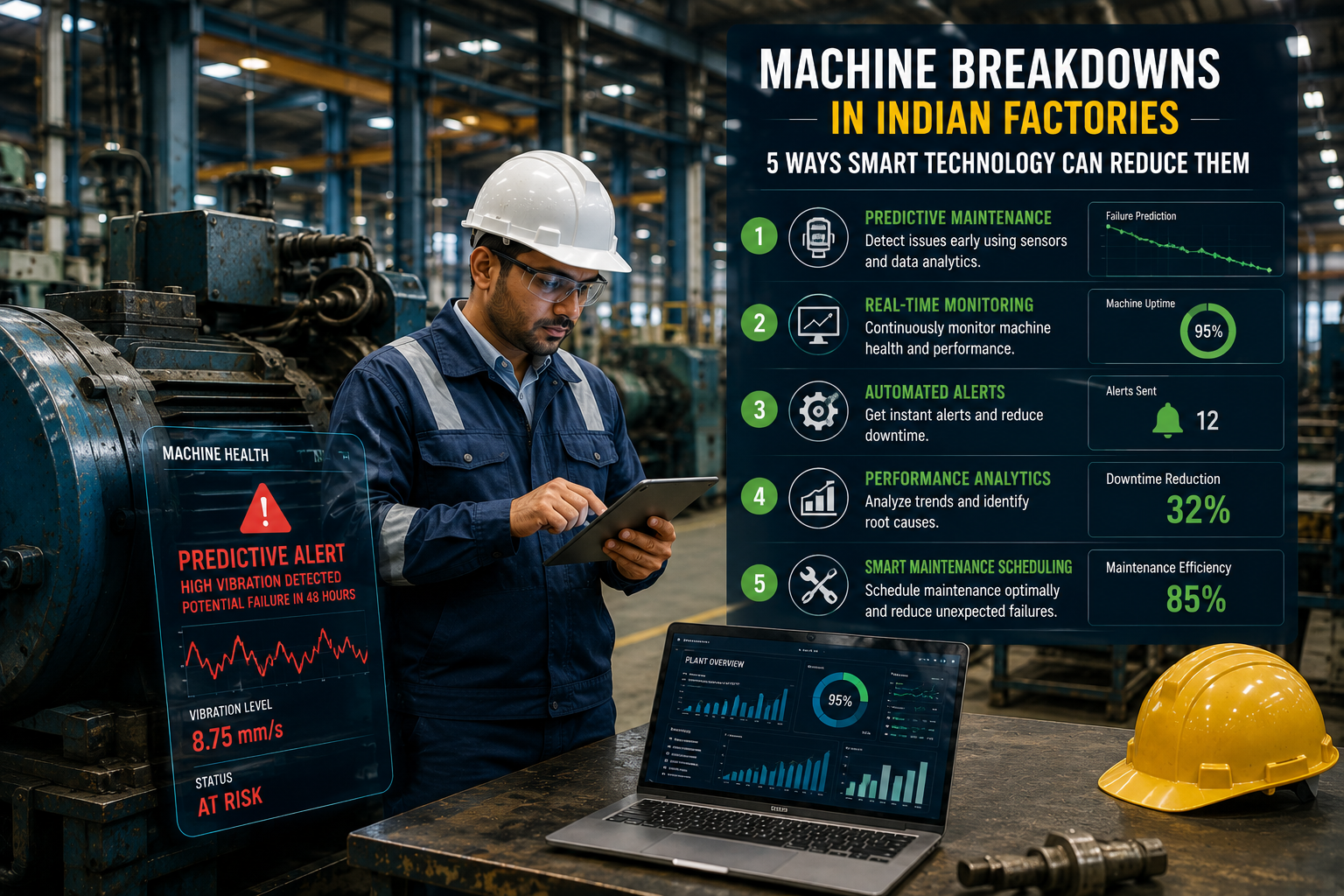
Unplanned machine breakdowns are one of the biggest productivity killers in Indian manufacturing. Whether it is a critical CNC machine, a packaging line, a boiler, or a press, a sudden failure can stop the entire production process within minutes. The impact goes far beyond repair costs — it includes lost production hours, delayed customer deliveries, overtime expenses, quality issues, and damage to the company’s reputation. In many Indian factories, especially those running older machines, the maintenance approach is still largely reactive (“fix it when it breaks”) or based on fixed time schedules.
This traditional method often leads to either unexpected failures or unnecessary maintenance that wastes time and money. The good news is that smart technology is transforming how factories handle machine reliability. Under the Smart Maintenance track, solutions powered by IoT sensors, AI, and advanced analytics are helping plants detect problems early, reduce downtime, and improve Overall Equipment Effectiveness (OEE).
Here are the most common reasons for machine breakdowns in Indian factories and five practical ways smart technology can significantly reduce them.
Common Causes of Machine Breakdowns in Indian Factories
● Absence of real-time condition monitoring systems
● Heavy dependence on reactive or calendar-based maintenance
● Inadequate lubrication, cleaning, and basic housekeeping practices
● Aging machines with limited or no sensors
● Operator errors and improper machine handling
● Delayed detection of early warning signs such as abnormal vibration, rising temperature, unusual noise, or power fluctuations
● Poor spare parts planning and long waiting times for critical components
● Lack of historical failure data for proper root cause analysis
These issues are especially common in mid-sized and older plants where digital transformation is still at an early stage.
5 Ways Smart Technology Can Reduce Machine Breakdowns
- Predictive Maintenance Using IoT Sensors and AI
Instead of waiting for a machine to fail, IoT sensors continuously collect data on vibration, temperature, pressure, current, oil quality, and other critical parameters. AI algorithms analyse this data to detect early signs of wear and tear and predict potential failures days or even weeks in advance.
Key Benefits:
● Predict remaining useful life of components
● Schedule maintenance only when it is actually needed
● Reduce unplanned downtime by 30–50% in many implementations
● Lower maintenance costs by avoiding unnecessary interventions
This approach is particularly effective for critical and high-value machines.
- Real-Time Condition Monitoring and Instant Alerts
Smart monitoring systems continuously track machine health and send automatic alerts to maintenance teams, supervisors, and even Plant Heads the moment any abnormal pattern is detected.
Advantages:
● Immediate response instead of delayed discovery during shifts
● Prevention of minor issues from turning into major breakdowns
● Remote monitoring capability across multiple machines and plants
● Better coordination between production and maintenance teams
- Digital Work Instructions and Guided Maintenance Support
Many breakdowns take longer to resolve because technicians lack clear guidance or experience with complex machines. Intelligent tools provide step-by-step digital instructions, video guidance, AR (Augmented Reality) overlays, and access to past repair history.
How it Helps:
● Reduces human error during repairs
● Shortens Mean Time To Repair (MTTR)
● Enables less experienced technicians to perform high-quality work
● Standardises maintenance practices across shifts and plants
- Intelligent Spare Parts Prediction and Inventory Management
One of the most frustrating reasons for extended downtime is the unavailability of the right spare part. Predictive tools analyse machine health data and historical patterns to forecast which components are likely to fail and when.
Results:
● Optimised spare parts inventory (neither excess nor shortage)
● Automatic alerts or purchase triggers for critical components
● Significant reduction in waiting time during breakdowns
● Better control over working capital locked in inventory
- Advanced Root Cause Analysis and Continuous Improvement
Smart platforms collect detailed failure data over time and use AI to identify recurring problems, hidden patterns, and underlying causes that traditional methods often miss.
Long-term Impact:
● Shift from temporary fixes to permanent solutions
● Improved maintenance planning and machine upgrade decisions
● Higher machine reliability and overall plant productivity
● Creation of a data-driven maintenance culture
Conclusion
Machine breakdowns no longer have to be accepted as an unavoidable part of factory life. By adopting smart technology, Indian manufacturers can move from reactive firefighting to proactive and predictive maintenance. The result is lower downtime, reduced costs, higher productivity, and improved competitiveness. manAIhub is designed to support Plant Leaders, Maintenance Heads, Engineers, and CXOs on this journey. Under the Smart Maintenance track, it offers practical insights, real Indian factory use cases, and connections to solution providers who understand the challenges of Indian manufacturing environments.
Ready to Reduce Machine Breakdowns in Your Plant?
Start by identifying your most critical machines and exploring predictive maintenance solutions that deliver measurable results.
What is the most frequent or costly machine breakdown issue in your factory?
Share your experience in the comments or connect with other manufacturing professionals on manAIhub.