
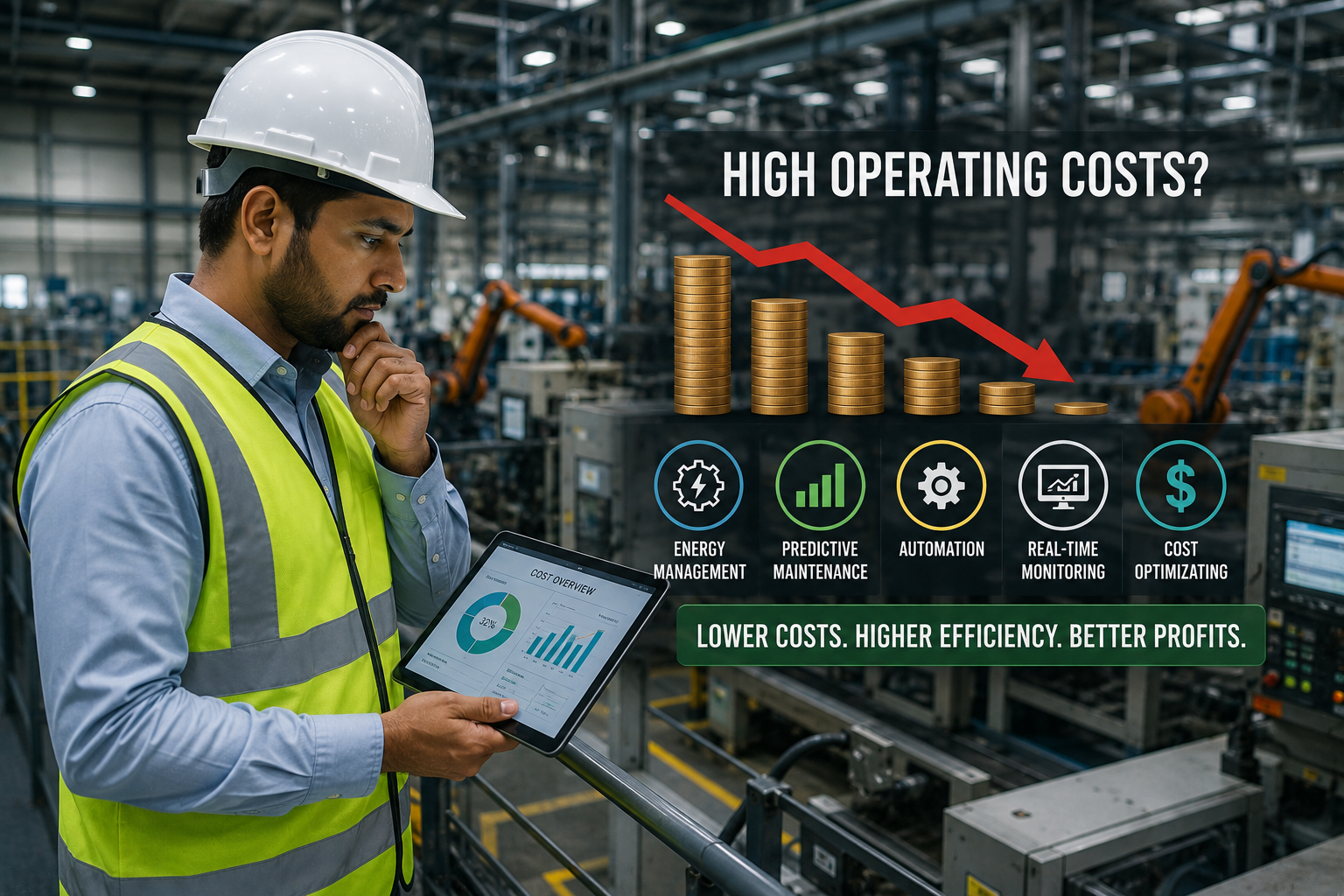
High operating costs are one of the biggest pressures facing Indian manufacturers today. Rising energy prices, expensive maintenance, material waste, inefficient processes, and high manpower costs are squeezing margins across industries. Many factories continue to operate with traditional methods that leave significant cost-saving opportunities untapped.
In a competitive market, controlling and reducing operating costs has become essential for survival and growth. Smart technology — powered by AI, IoT, data analytics, and automation — is helping progressive plants systematically lower their operating expenses while improving performance.
Here are the major contributors to high operating costs and 5 practical ways smart technology can help reduce them.
Major Contributors to High Operating Costs in Factories
● High energy consumption and poor energy management
● Frequent machine breakdowns and expensive reactive maintenance
● Material waste, scrap, and rework
● Low production efficiency and high idle time
● Excess inventory and poor material planning
● Overtime and inefficient manpower utilization
● Quality-related losses and customer returns
● Manual processes that consume time and create errors
These cost centers are interconnected. Improving one area often creates benefits in others.
5 Ways Smart Technology Can Lower Operating Costs
- Intelligent Energy Management Systems
Energy is one of the largest operating expenses in most factories. Smart energy systems monitor consumption in real time and identify wastage.
How it helps:
● Detect inefficient machines and processes
● Optimize load scheduling and peak demand
● Integrate renewable energy more effectively
● Deliver 10–25% energy cost reduction in many cases
- Predictive Maintenance to Cut Downtime and Repair Costs
Unplanned breakdowns are extremely expensive. Predictive maintenance uses IoT sensors and AI to detect problems early.
Benefits:
● Significant reduction in unplanned downtime
● Lower emergency repair and overtime costs
● Longer machine life
● Better spare parts planning and reduced inventory of emergency spares
- Material Waste Reduction through Predictive Quality and Process Control
Scrap, rework, and over-consumption of materials directly increase costs. Intelligent tools help prevent waste before it occurs.
Impact:
● Higher first-pass yield
● Reduced raw material consumption
● Lower quality-related losses
● Better process stability and consistency
- Production Optimization and Real-Time Efficiency Monitoring
Smart systems provide live visibility into production performance and help eliminate hidden losses.
Results:
● Higher machine and manpower utilization
● Reduced idle time and bottlenecks
● Better production scheduling
● Increased output without major capital investment
- Data-Driven Decision Making Across Operations
When energy, maintenance, quality, production, and inventory data are connected, management gains a clear picture of true cost drivers.
Long-term Advantages:
● Accurate cost visibility at product and process level
● Faster and better operational decisions
● Continuous improvement culture
● Sustainable reduction in overall operating costs
Conclusion
High operating costs are not inevitable. With the right smart technology, Indian factories can systematically reduce energy, maintenance, material, and efficiency-related expenses while improving reliability and output. manAIhub helps Plant Leaders, CXOs, and Operations teams identify the highest-impact cost-saving opportunities and connect with practical solutions across all six tracks — Smart Maintenance, Quality & Inspection, Production Optimization, Supply Chain & Planning, Energy & Sustainability, and Workforce Augmentation.
Ready to Lower Your Factory’s Operating Costs?
Start by identifying your top three cost centers and explore smart technology solutions that can deliver measurable savings.
Which operating cost is hurting your plant the most right now?
Share your challenges in the comments or join the manAIhub community to learn from other manufacturing leaders.