
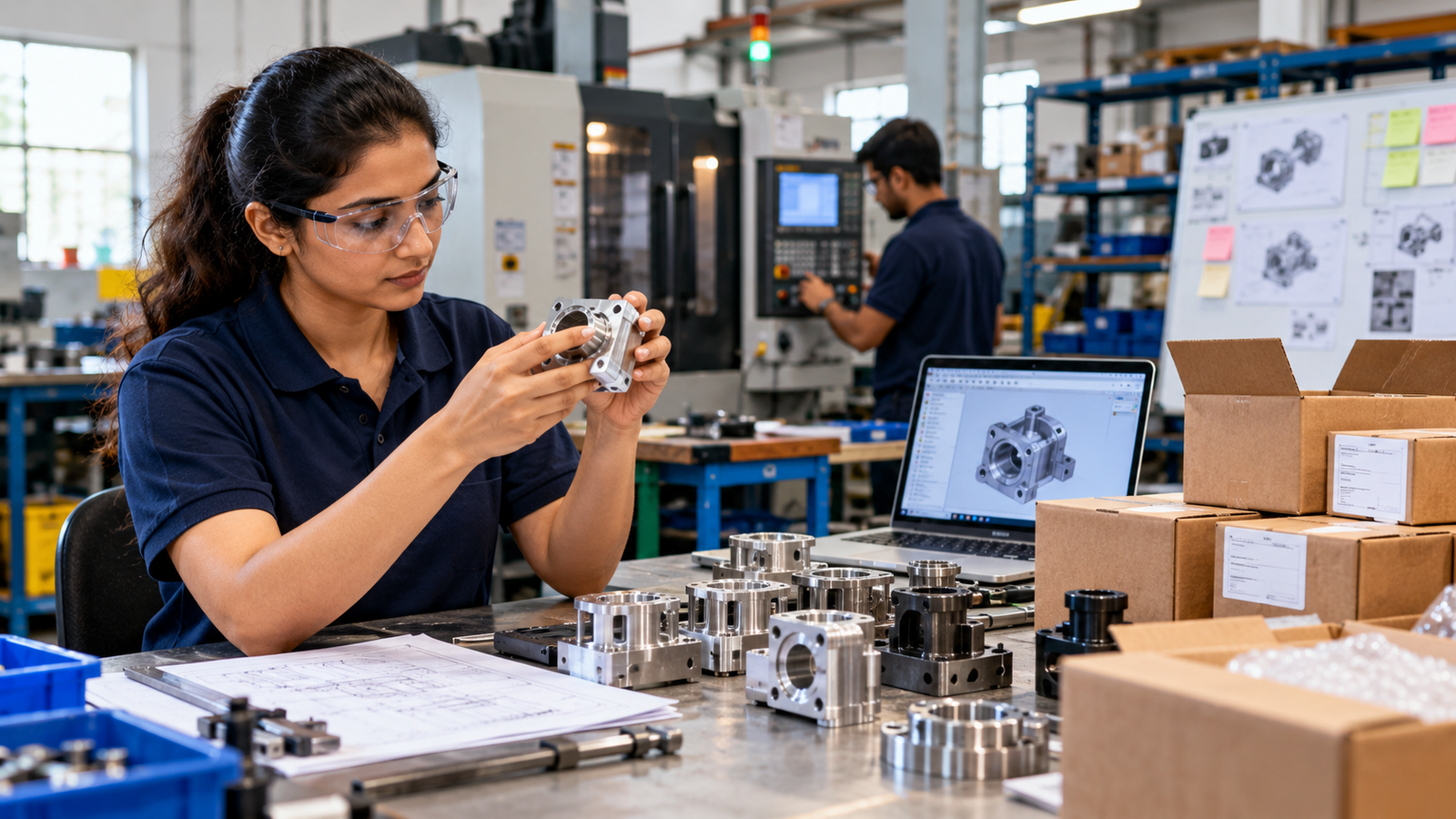
Small batch and custom orders are becoming increasingly common in Indian manufacturing. Customers now expect greater variety, personalization, and shorter lead times. While this shift creates new business opportunities, it also brings significant operational challenges.
Factories designed for high-volume, repetitive production often struggle with frequent changeovers, complex scheduling, higher error rates, and longer lead times when handling small batches and custom requirements. Traditional systems and processes are not flexible enough to manage this complexity efficiently.
Intelligent tools are helping manufacturers adapt to this new reality by bringing flexibility, speed, and accuracy into small batch and custom order execution.
Here are the common challenges with small batch and custom orders and 5 practical ways intelligent tools can handle them.
Common Challenges with Small Batch and Custom Orders
- Frequent and time-consuming changeovers
- Complex and constantly changing production schedules
- Higher risk of errors due to product variation
- Difficulty in estimating accurate lead times
- Increased material planning complexity
- Higher per-unit cost and lower efficiency
- Skill gaps in handling non-standard work
- Poor visibility into the status of individual custom orders
These challenges are especially visible in industries such as engineering, auto components, furniture, apparel, and industrial equipment.
5 Ways Intelligent Tools Can Handle Small Batch and Custom Orders
1. Intelligent and Dynamic Scheduling
Advanced planning tools create optimized schedules that account for high product variety, changeover times, and priority custom orders.
Benefits:
- Better sequencing of small batches
- Reduced idle time between jobs
- Improved ability to accommodate urgent custom orders
- Higher overall schedule reliability
2. Digital Work Instructions and Error-Proofing
Intelligent systems provide product-specific digital instructions, checklists, and visual guidance for each unique order.
Impact:
- Lower error rates despite high variety
- Faster operator readiness for new configurations
- Consistent quality across custom jobs
- Reduced dependency on tribal knowledge
3. Rapid Changeover Support Tools
Smart tools help standardize and accelerate changeover processes through digital guidance, preparation checklists, and real-time support.
Advantages:
- Significant reduction in setup time
- More consistent changeover performance
- Higher machine availability for actual production
- Better feasibility of small batch manufacturing
4. Real-Time Tracking of Individual Orders
Intelligent platforms provide live visibility into the status of every small batch or custom order throughout the production process.
Results:
- Accurate progress tracking
- Faster response to customer queries
- Early detection of delays
- Improved on-time delivery for custom work
5. Predictive Costing and Resource Planning
Advanced tools analyze historical data to estimate time, material, and resource requirements more accurately for custom and small batch orders.
Long-term Value:
- Better pricing and margin control
- Improved capacity planning
- Reduced surprises during execution
- Higher profitability of non-standard orders
Conclusion
Small batch and custom orders no longer have to disrupt factory operations. With the right intelligent tools, manufacturers can handle high variety with greater speed, accuracy, and control — turning customization into a competitive advantage rather than a burden.
manAIhub supports Plant Leaders, Production Heads, and Planning teams with practical insights and solutions under the Production Optimization and Supply Chain & Planning tracks to manage small batch and custom manufacturing effectively.
Ready to Handle Small Batch and Custom Orders Better?
Start by identifying the biggest pain points in your current custom order process — changeovers, errors, scheduling, or visibility. Then explore intelligent tools that can address those specific challenges.
What is the biggest challenge you face with small batch or custom orders?
Share your experience in the comments or connect with other manufacturing professionals on manAIhub.