Real-time visibility is one of the most critical requirements for efficient manufacturing. Yet in many Indian factories, Plant Heads, supervisors, and managers still operate with delayed or incomplete information. By the time they learn about a machine stoppage, quality issue, or material shortage, valuable time has already been lost.
Poor visibility leads to slow decision-making, reactive firefighting, and missed opportunities for improvement. In today’s competitive environment, running a factory without live insights is like driving with a blindfold.
Smart systems are transforming this situation by providing accurate, real-time visibility across machines, processes, and people on the shop floor.
Here are the common problems caused by poor real-time visibility and 5 practical steps smart systems can take to improve it.
Common Problems Caused by Poor Real-Time Visibility
- Delayed awareness of machine breakdowns and stoppages
- Lack of clarity on production progress against targets
- Late detection of quality deviations
- Manual and time-consuming data collection
- Dependence on verbal updates and end-of-shift reports
- Difficulty in identifying bottlenecks as they develop
- Slow response to material shortages or delays
- Limited ability for remote or multi-plant monitoring
These issues are common in plants that still rely heavily on paper records, whiteboards, and manual reporting.
5 Steps Smart Systems Can Improve Real-Time Visibility
1. Live Machine and Production Monitoring
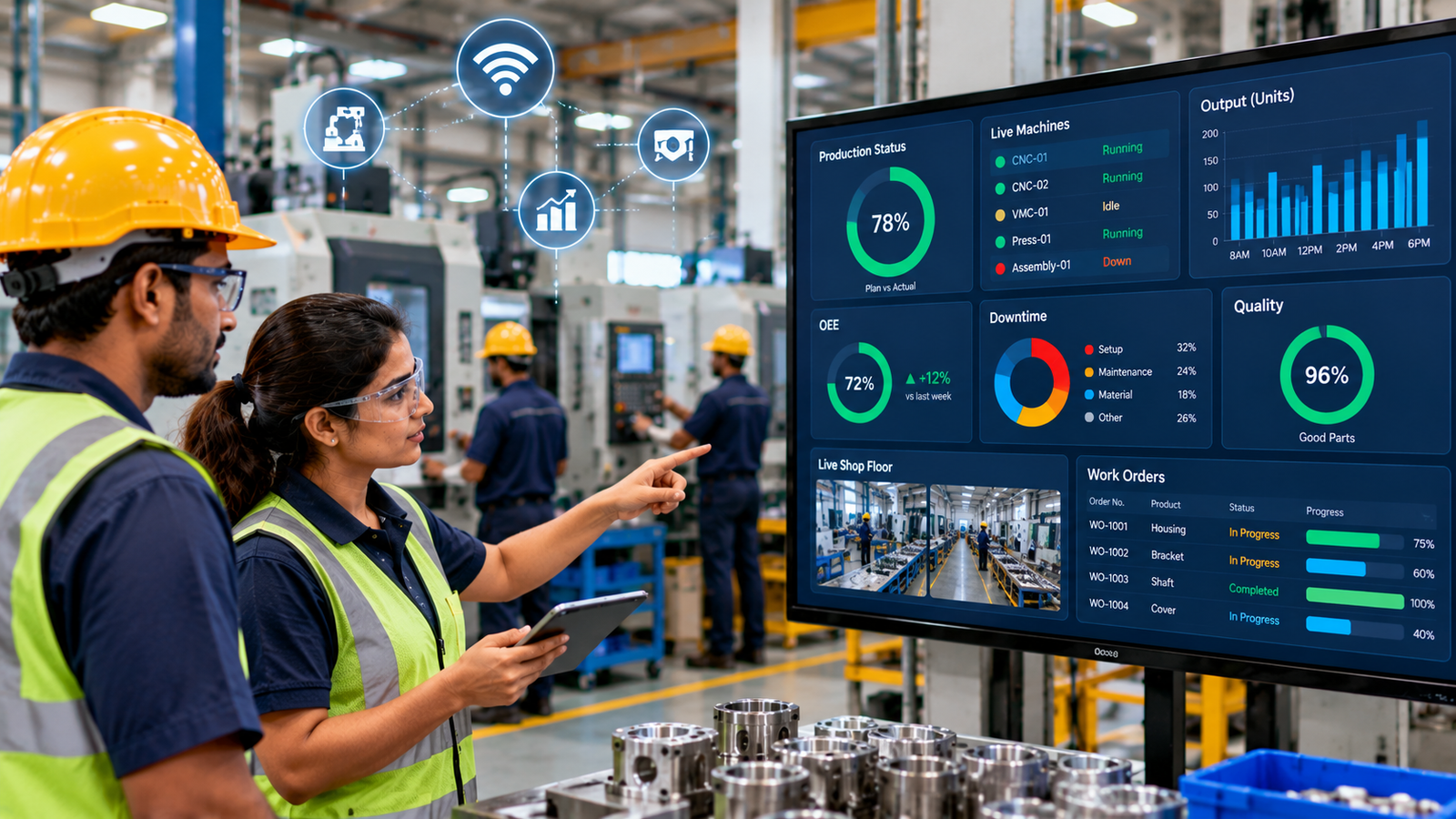
IoT sensors and intelligent platforms continuously capture machine status, output, downtime reasons, and performance metrics.
Benefits:
- Instant view of what is happening on every critical machine
- Accurate and automatic data instead of manual entries
- Faster response to stoppages
- Higher trust in the information
2. Real-Time Dashboards for All Levels
Smart systems present live information through simple dashboards accessible to operators, supervisors, and management.
Impact:
- Everyone works with the same current data
- Quicker shift-level and daily decision-making
- Reduced time spent chasing updates
- Better alignment across teams
3. Automated Alerts and Exception Notifications
Instead of monitoring everything manually, intelligent systems send instant alerts when something goes wrong or drifts from the plan.
Advantages:
- Supervisors focus only on issues that need attention
- Faster escalation and resolution
- Reduced information overload
- Proactive rather than reactive management
4. End-to-End Process and Material Visibility
Smart tools track not only machines but also material flow, work-in-progress, and order status in real time.
Results:
- Clear picture of production flow from start to finish
- Early detection of bottlenecks and shortages
- Better coordination between stores, production, and dispatch
- Improved on-time delivery performance
5. Historical + Live Data for Continuous Improvement
Real-time systems also store data that can be analyzed later to identify patterns and recurring issues.
Long-term Value:
- Strong foundation for root cause analysis
- Data-driven improvement projects
- Higher overall transparency and accountability
- Sustainable performance gains
Conclusion
Poor real-time visibility keeps factories in a reactive mode. Smart systems change this by giving Plant Leaders and teams the power to see problems as they happen — and often before they escalate. The result is faster decisions, higher efficiency, and greater control over operations.
manAIhub supports manufacturers in building real-time visibility across the shop floor through practical solutions under the Production Optimization, Smart Maintenance, and Quality & Inspection tracks.
Ready to Improve Shop Floor Visibility?
Start by identifying the areas where you currently face the biggest delays in getting accurate information. Then explore smart systems that can close those visibility gaps.
What is the biggest visibility challenge on your shop floor right now?
Share your experience in the comments or connect with other manufacturing professionals on manAIhub.