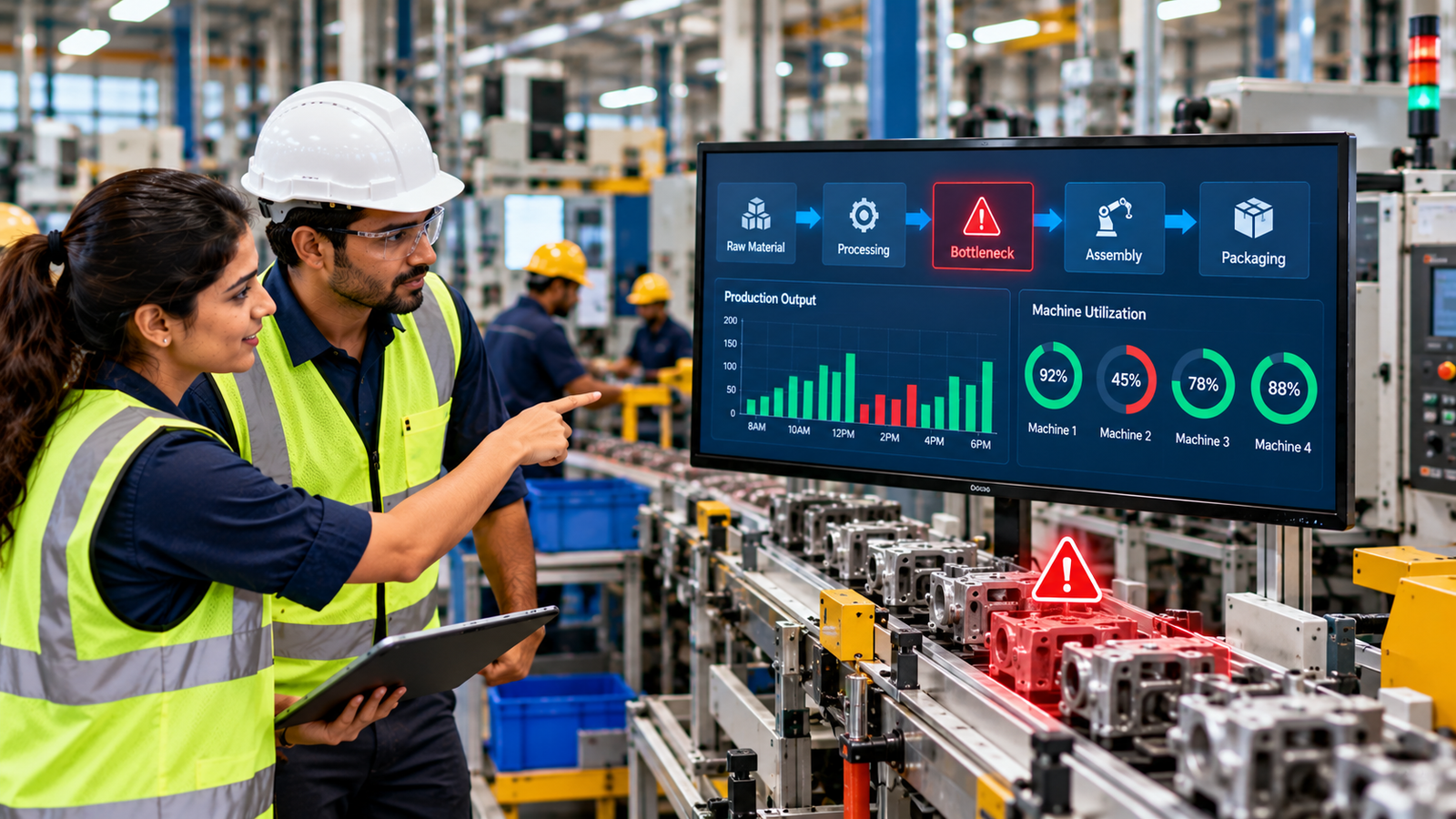
Production bottlenecks are one of the most common and costly problems in manufacturing plants. A bottleneck occurs when one process, machine, or resource limits the output of the entire production system. Even if other machines have spare capacity, the overall plant throughput remains constrained by the slowest point.
In many Indian factories, bottlenecks remain hidden or are only discovered after delays and missed targets. Traditional methods of identifying and resolving them often rely on experience and manual observation, which can be slow and incomplete.
Intelligent systems are helping manufacturers detect bottlenecks early, understand their root causes, and clear them systematically — leading to higher throughput and better resource utilization.
Here are the common causes of production bottlenecks and 5 practical steps intelligent systems can take to clear them.
Common Causes of Production Bottlenecks
- One machine or process running slower than the rest of the line
- Frequent minor stoppages or long changeovers at critical points
- Material shortages or delayed internal logistics
- Uneven workload distribution across machines or shifts
- Quality issues causing rework at specific stages
- Limited visibility into real-time flow and constraints
- Dependency on a few skilled operators for key processes
- Poor coordination between upstream and downstream processes
These issues often remain unresolved because plants lack accurate, real-time data on where and why flow is getting restricted.
5 Steps Intelligent Systems Can Clear Production Bottlenecks
1. Real-Time Flow Visibility and Bottleneck Detection
Intelligent systems continuously track production rates, cycle times, and queue lengths across the entire process to pinpoint the exact bottleneck.
Benefits:
- Instant identification of the constraining process
- No more guesswork or delayed discovery
- Clear prioritisation of improvement efforts
- Live view of how the bottleneck is affecting overall output
2. Root Cause Analysis of Constraints
Once a bottleneck is identified, advanced analytics help uncover why it exists — whether due to machine performance, material flow, quality issues, or operator-related factors.
Impact:
- Focused and effective corrective actions
- Avoidance of temporary or wrong fixes
- Permanent improvement rather than repeated firefighting
- Better understanding of system-level constraints
3. Dynamic Scheduling and Load Balancing
Intelligent planning tools adjust production schedules and redistribute work to reduce pressure on the bottleneck resource.
Advantages:
- Better utilization of non-bottleneck resources
- Reduced waiting time and WIP accumulation
- Higher overall throughput
- More balanced and stable production flow
4. Predictive Alerts for Emerging Bottlenecks
Smart systems monitor trends and raise early warnings when a process is at risk of becoming a bottleneck due to rising cycle times, increasing queues, or declining performance.
Results:
- Proactive action before output is severely impacted
- Reduced disruption to customer deliveries
- Higher production stability
- Continuous flow improvement
5. Continuous Monitoring and Improvement Feedback Loops
Intelligent platforms track the impact of corrective actions and ensure that resolved bottlenecks do not reappear, while also identifying the next constraint in the system.
Long-term Value:
- Ongoing increase in plant capacity
- Systematic elevation of overall throughput
- Data-driven continuous improvement culture
- Higher return from existing assets
Conclusion
Production bottlenecks limit the true potential of a manufacturing plant. By using intelligent systems, manufacturers can move from reactive problem-solving to proactive bottleneck management — unlocking hidden capacity and improving delivery performance.
manAIhub supports Plant Leaders, Production Heads, and Operations teams with practical insights and solutions under the Production Optimization track to identify and clear bottlenecks effectively.
Ready to Clear Bottlenecks in Your Plant?
Start by mapping your current production flow and identifying the points where work piles up or slows down. Then explore intelligent systems that can provide real-time visibility and actionable insights.
What is the biggest production bottleneck in your factory right now?
Share your experience in the comments or connect with other manufacturing professionals on manAIhub.