
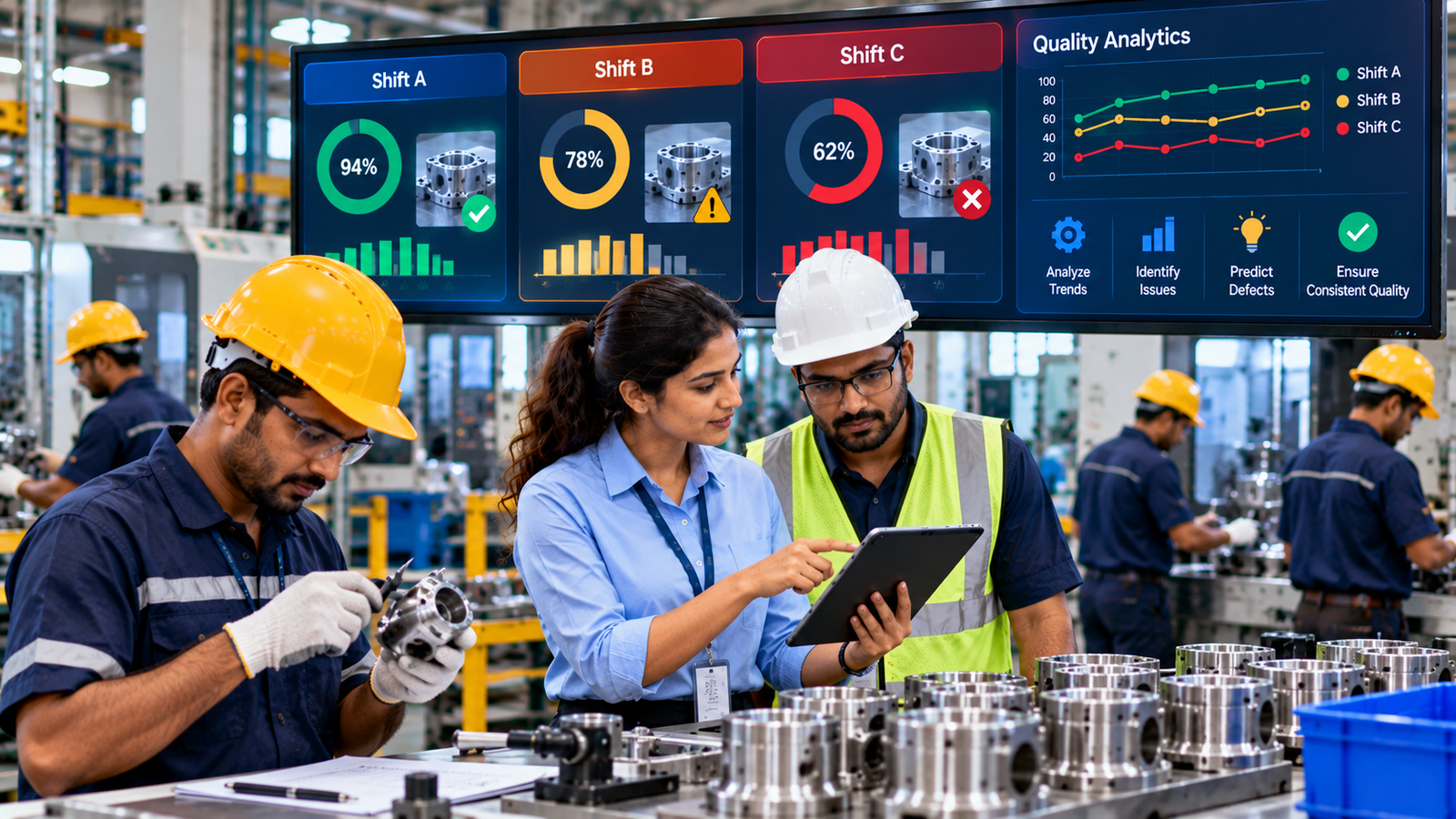
Many manufacturing plants face a common but frustrating problem: quality performance varies significantly between shifts. The same product, produced on the same machines with the same materials, can show different defect rates, rework levels, or customer complaints depending on whether it was made during the day shift, night shift, or weekend shift.
These inconsistencies create quality instability, higher costs, and reduced customer confidence. Traditional approaches often rely on training or supervision, but without data-driven insights, the root causes remain unclear and the differences persist.
Advanced analytics is helping manufacturers identify why quality varies across shifts and take targeted actions to bring consistency.
Here are the common reasons for quality differences between shifts and 5 practical steps advanced analytics can take to reduce them.
Common Reasons for Quality Differences Between Shifts
- Variation in operator skill and experience levels
- Differences in process discipline and adherence to standards
- Inconsistent machine setup or parameter settings
- Fatigue and reduced attention during night shifts
- Uneven supervision and support availability
- Poor communication of issues between shifts
- Limited real-time feedback on quality performance
- Lack of data to compare shifts objectively
These factors often combine to create noticeable gaps in quality outcomes across shifts.
5 Steps Advanced Analytics Can Reduce Quality Differences Between Shifts
1. Shift-Wise Quality Performance Dashboards
Advanced analytics platforms automatically break down quality data by shift, machine, product, and defect type.
Benefits:
- Clear visibility into which shifts perform better or worse
- Objective comparison instead of assumptions
- Faster identification of problem areas
- Data-driven discussions during shift handovers
2. Root Cause Analysis of Shift Variations
Analytics tools examine patterns linked to specific shifts — such as parameter deviations, downtime events, or inspection results — to uncover underlying causes.
Impact:
- Accurate understanding of why differences exist
- Focused corrective actions instead of generic training
- Permanent reduction in recurring shift-related issues
- Better process standardization
3. Real-Time Quality Monitoring and Alerts
Intelligent systems provide live quality feedback so that deviations are detected and corrected during the shift itself.
Advantages:
- Immediate response to emerging quality problems
- Reduced accumulation of defects
- Consistent process control across all shifts
- Lower dependency on end-of-shift inspections
4. Standardisation through Digital Work Instructions and Guidance
Analytics-driven insights help refine and enforce digital standard operating procedures that reduce operator-to-operator and shift-to-shift variation.
Results:
- More consistent process execution
- Lower influence of individual skill differences
- Faster on-boarding of new operators
- Improved quality stability across shifts
5. Predictive Insights for High-Risk Shifts and Conditions
Advanced models can predict when quality risks are higher based on shift patterns, machine conditions, or historical trends, allowing proactive measures.
Long-term Value:
- Preventive actions before defects occur
- Continuous reduction in quality variation
- Stronger overall process capability
- Higher customer confidence in product consistency
Conclusion
Quality differences between shifts are a sign of process instability. Advanced analytics helps manufacturers move from anecdotal explanations to data-backed understanding and action — resulting in more consistent quality around the clock.
manAIhub supports Quality Heads, Plant Leaders, and Operations teams with practical insights and solutions under the Quality & Inspection track to reduce shift-to-shift quality variation.
Ready to Reduce Quality Differences Between Shifts?
Start by analyzing your quality data by shift to identify the biggest gaps. Then explore advanced analytics tools that can uncover root causes and drive consistency.
What is the biggest quality difference you notice between shifts in your plant?
Share your experience in the comments or connect with other manufacturing professionals on manAIhub.