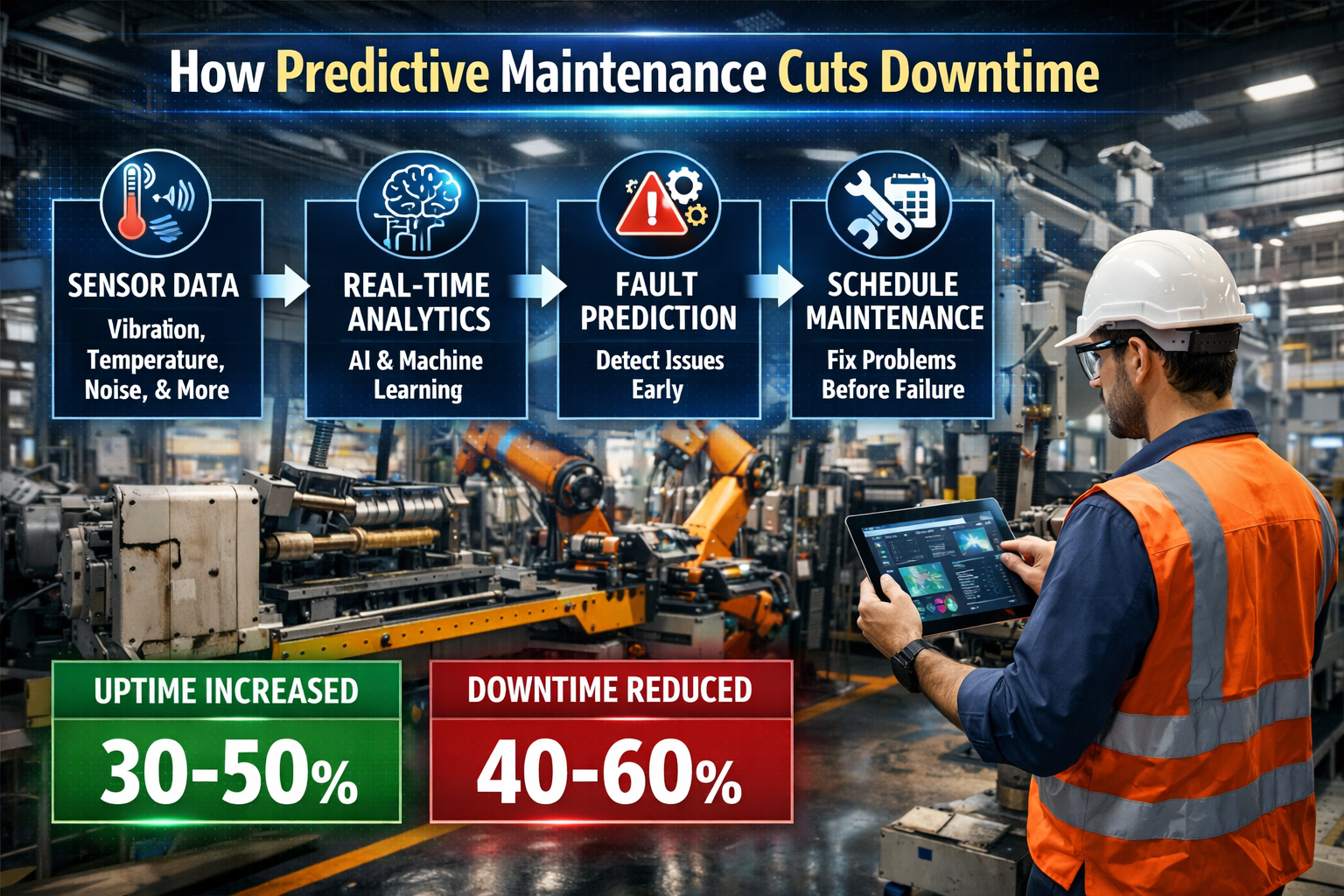
Factories lose millions to unplanned breakdowns. Predictive maintenance (PdM) flips this by using AI to predict failures before they happen, turning reactive teams into proactive profit protectors.
Why PdM Beats Reactive Maintenance
Traditional schedules waste time on healthy machines while critical assets surprise-fail. PdM analyzes vibration, temperature, and pressure data in real-time to flag issues 72 hours early – giving you time to plan, not panic.
Real impact:
- 20-30% drop in unplanned downtime
- 10-15% maintenance cost reduction
- Spare parts optimized, not overstocked
Building Your PdM Pilot in 90 Days
- Pick 3 high-impact assets – Focus on lines where one failure kills daily output (e.g., compressors, motors, pumps).
- Tap existing IoT data – Most plants already have vibration sensors or energy meters feeding historians. Start there.
- Simple anomaly models first – Use unsupervised ML to spot “weird” patterns before building complex RUL predictions.
- Integrate with CMMS – Link predictions to work orders so technicians get alerts with probable causes and parts lists.
Common Pitfalls (And Fixes)
| Problem | Fix |
| “Data is too noisy” | Filter with physics-based rules (e.g., ignore spikes during startups) |
| “Technicians ignore alerts” | Start with 80% precision; calibrate thresholds weekly with operator feedback |
| “No business case” | Track one KPI: unplanned downtime hours before/after pilot |
ManAIhub members are live-testing PdM on bottling lines and CNC clusters right now. Join the Smart Maintenance track to access:
- Plug-and-play anomaly detection templates
- Peer-reviewed CMMS data cleanup checklists
- Live Q&A with plants who’ve cut MTTR by 40%
[Join Smart Maintenance Track Now]