


What we work on inside the track
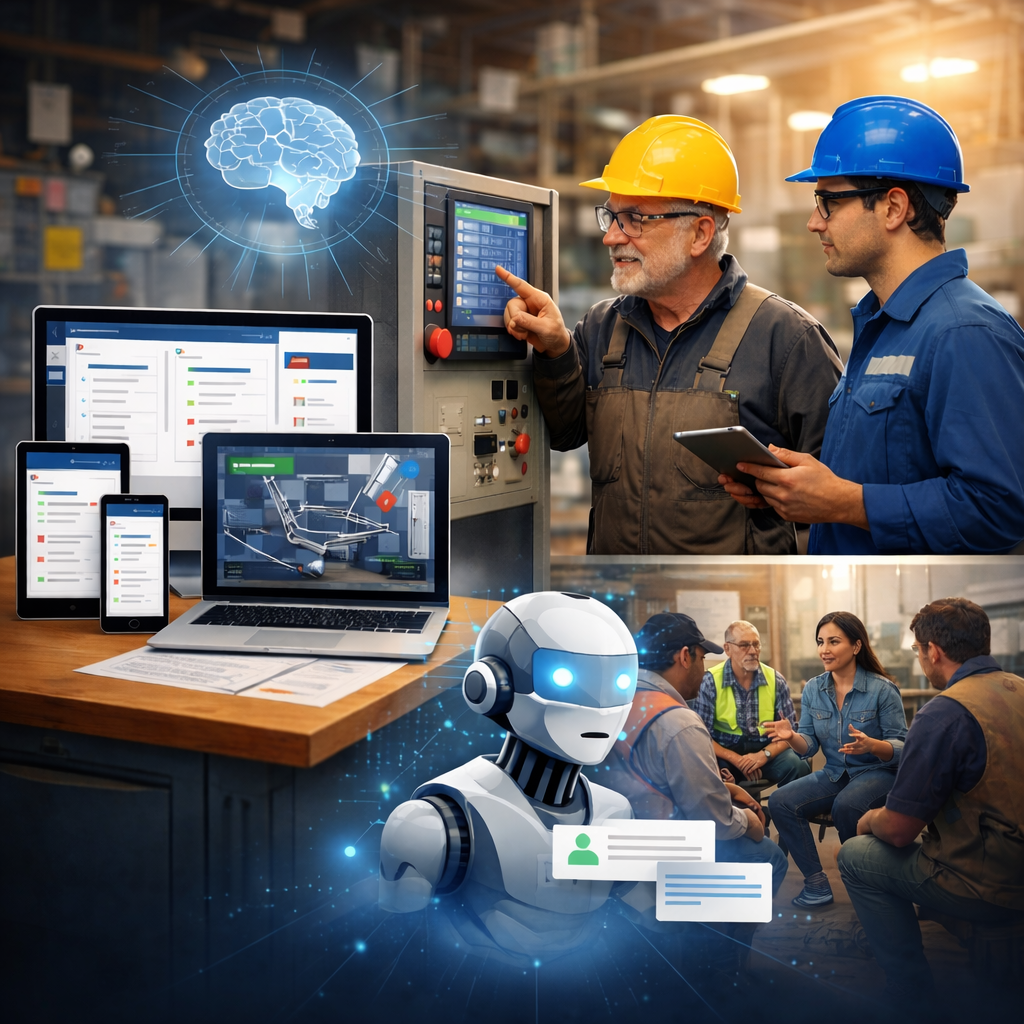
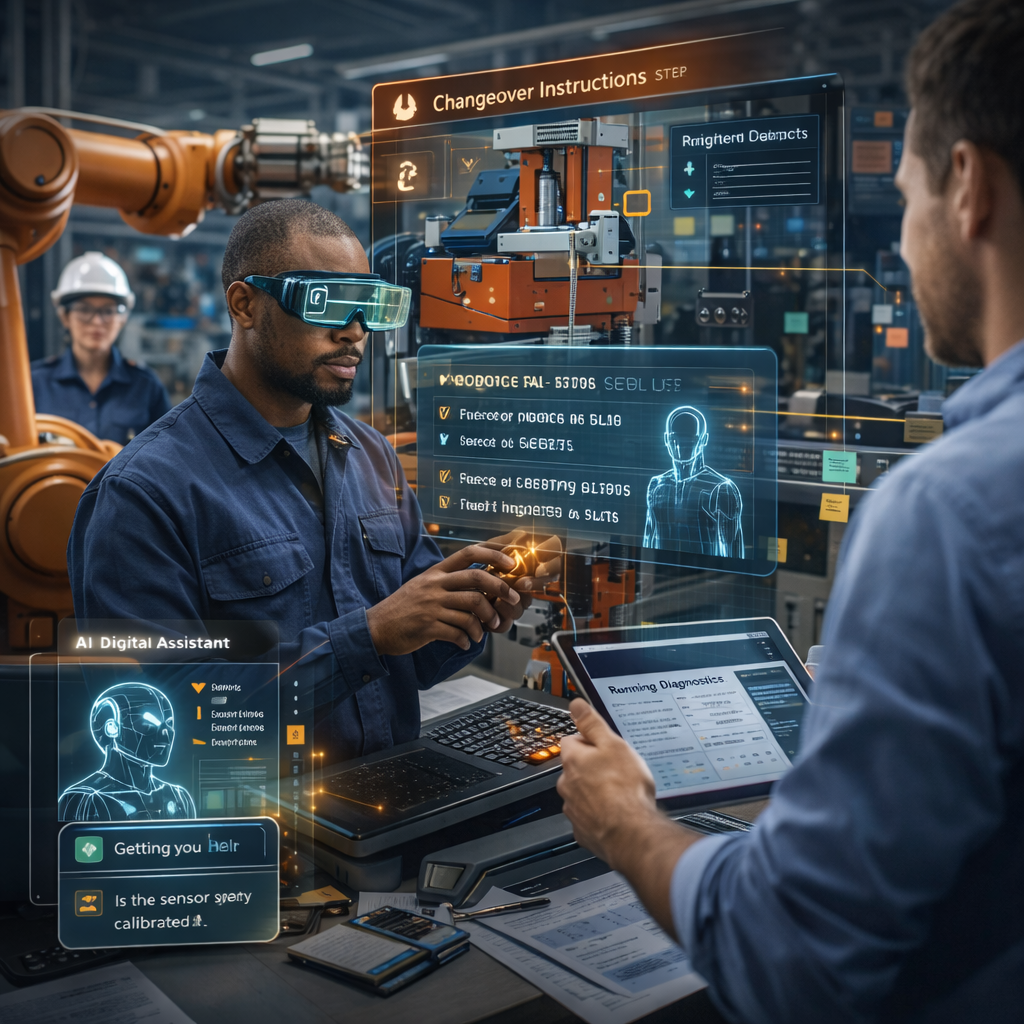
Converting SOPs into interactive, visual, and context-aware guides on tablets, HMIs, or AR devices. Using AI to suggest next steps, parts, and tools based on current task and machine state.

Skill matrices linked to task assignment and guidance level—junior operators get more support, experts get shortcuts. On-the-job learning paths that adapt as operators complete tasks.
Natural language interfaces where operators describe symptoms and get probable causes and checks. Connecting these copilots to CMMS, historians, and manuals for richer answers.

Techniques to involve operators in design, address fears, and build trust around AI tools.eaj.ebujournals+1 Measuring impact in terms of safety, training time, and first-time-right performance.
Typical problems members bring
- New hires take too long to become productive.
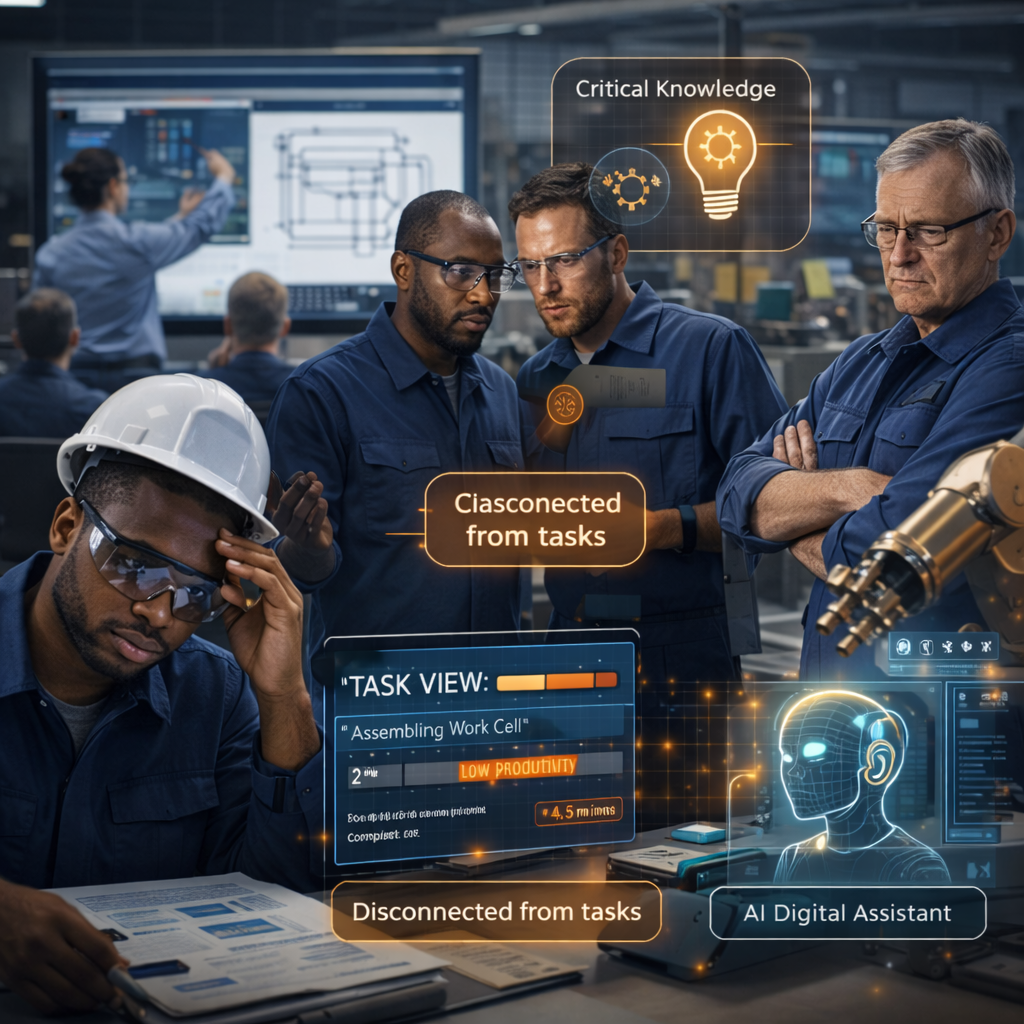
- Critical know-how sits in a few experts’ heads; when they’re off, everything slows down.
- Training is mostly classroom-based and disconnected from real tasks.
- Operators are skeptical of ‘AI’ and ‘automation’; we need them to trust and adopt it.
What you get by joining
Design patterns and UX examples
Screens, flows, and interaction patterns from plants where workers actually like using the tools.
Knowledge capture strategies
Methods to extract tacit know-how from experts and encode it into AI-ready formats.
Peer support for “people challenges”
Stories, scripts, and workshop formats to bring unions, supervisors, and operators into the change.