

A manAIhub Perspective
Artificial Intelligence is becoming a strategic priority for manufacturers across India. From predictive maintenance and quality inspection to production optimization and energy management, AI promises significant improvements in efficiency and profitability.
However, there is one challenge that consistently slows down AI adoption across manufacturing plants:
The data problem.
Many manufacturers want to implement AI but quickly discover that their biggest obstacle is not technology—it is data.
At manAIhub, we frequently see organizations investing in AI initiatives before addressing the underlying data foundation required for success.
The reality is simple:
AI is only as good as the data it receives.
Why Data Matters More Than AI


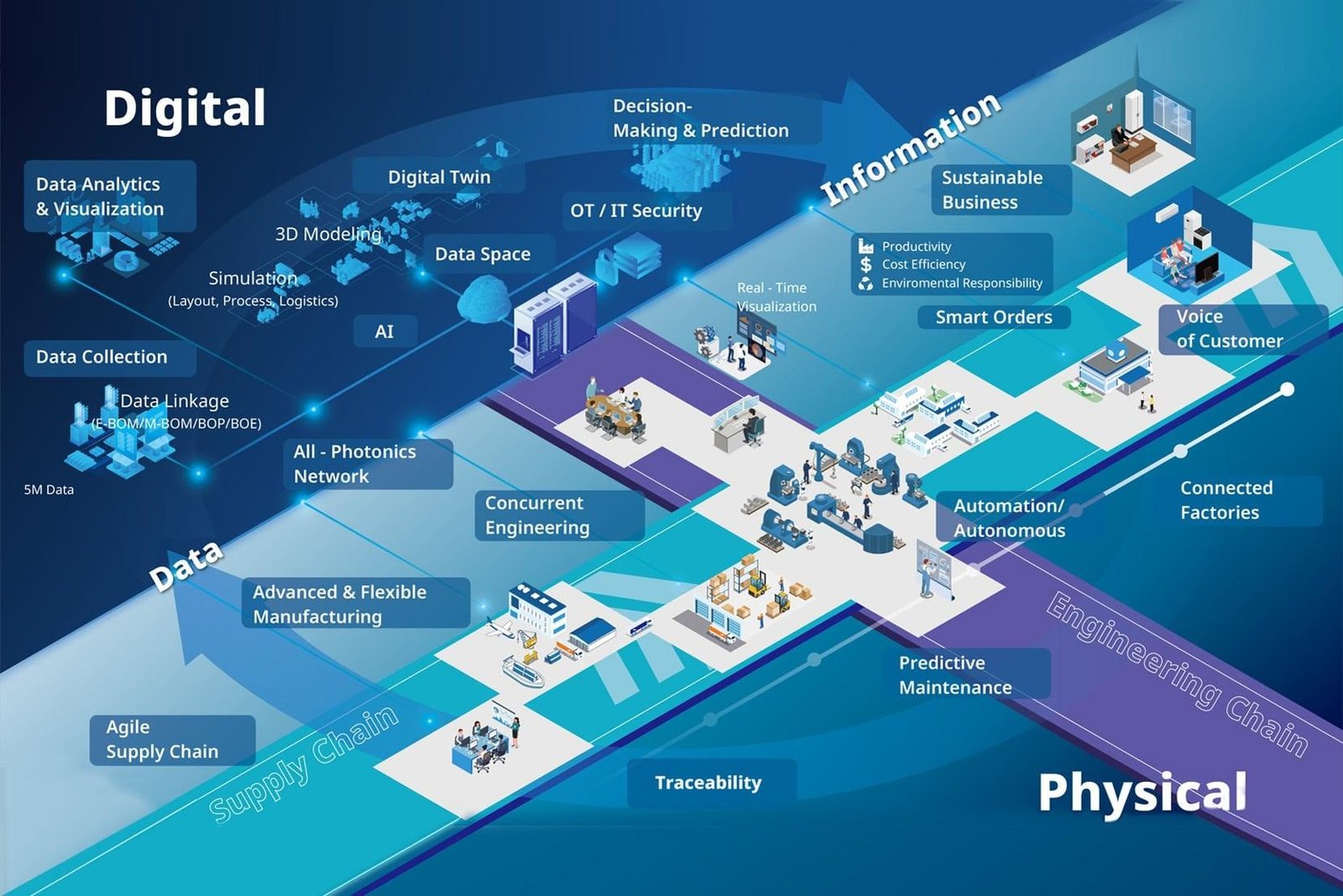


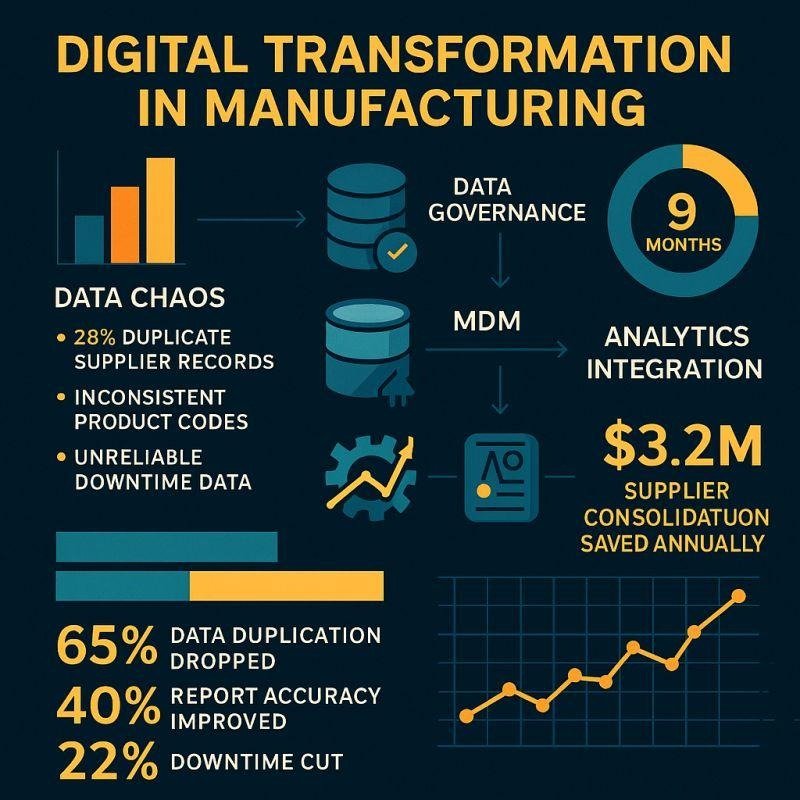
Every manufacturing plant generates massive amounts of information every day.
This includes:
- Machine performance data
- Production output data
- Quality inspection records
- Maintenance history
- Inventory information
- Energy consumption data
The challenge is not the lack of data.
The challenge is that much of this information is:
- Disconnected
- Incomplete
- Inconsistent
- Difficult to access
As a result, manufacturers struggle to convert raw data into actionable insights.
The Reality Inside Many Indian Factories
Despite increasing digitalization efforts, many manufacturing facilities still depend on:
- Excel spreadsheets
- Manual logbooks
- Paper-based records
- Standalone machine systems
- Department-specific databases
In many cases, different teams maintain separate datasets that rarely communicate with one another.
Production teams, maintenance teams, quality teams, and supply chain teams often work with different versions of the same information.
This creates operational blind spots and makes advanced analytics difficult.
The 5 Biggest Data Challenges in Manufacturing
1. Data Exists in Silos
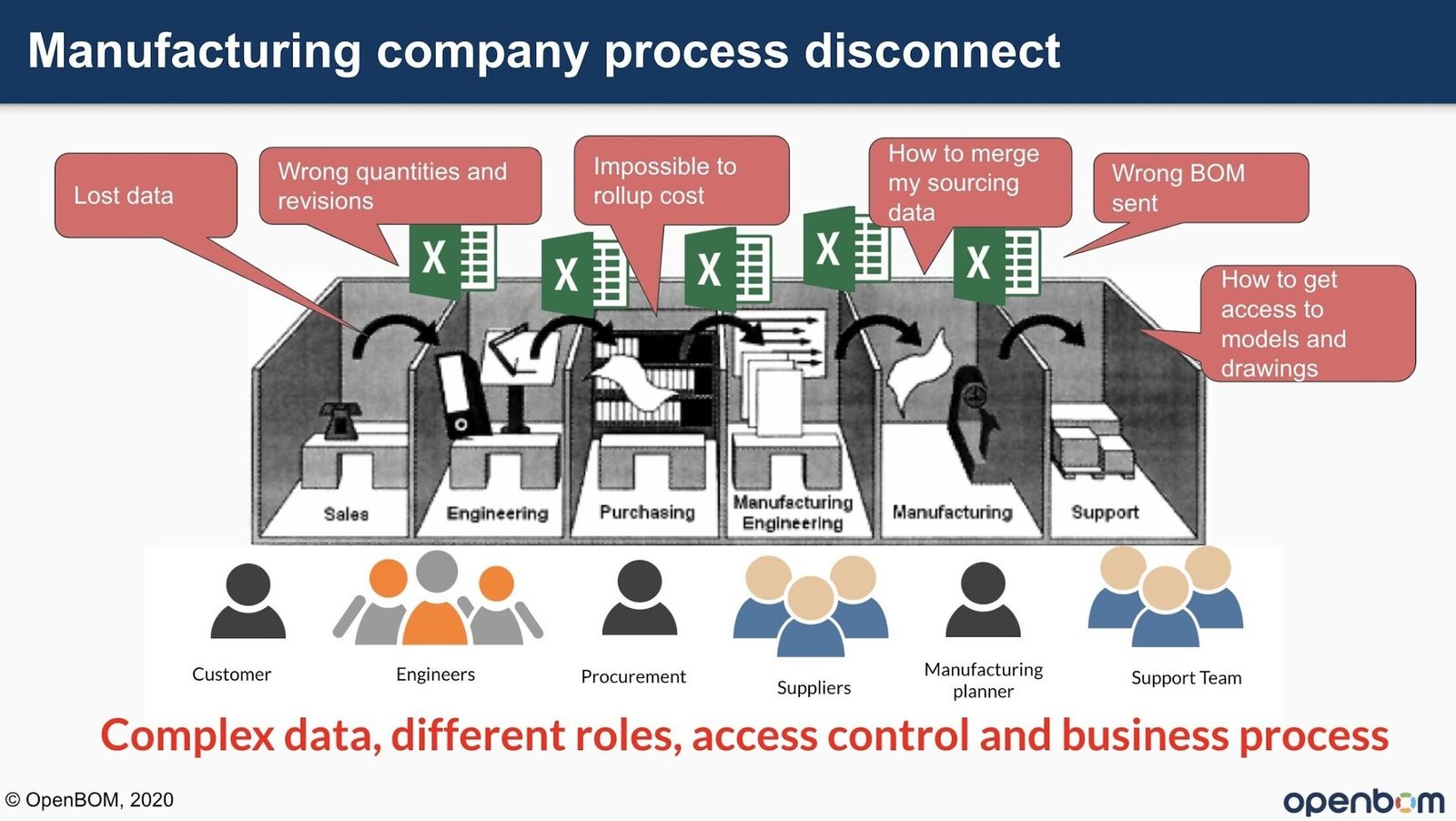
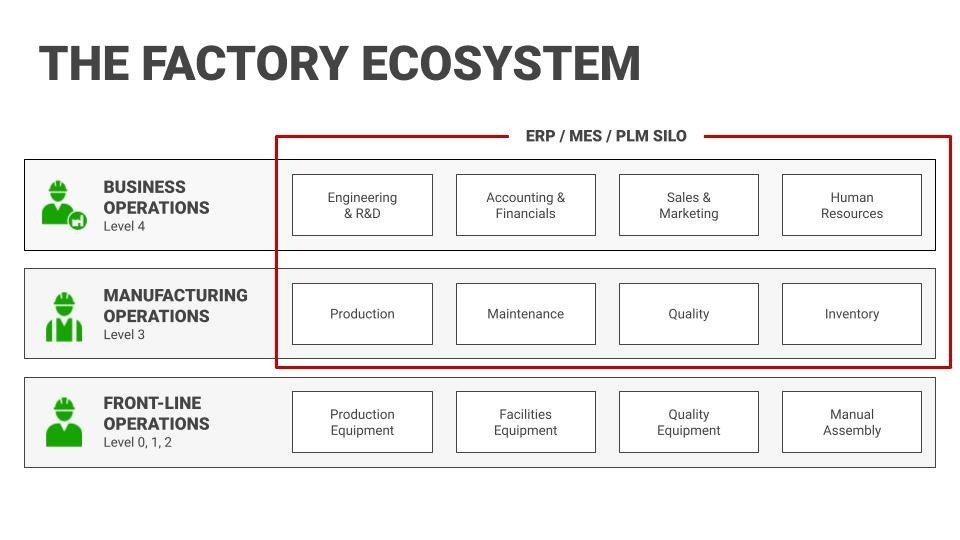
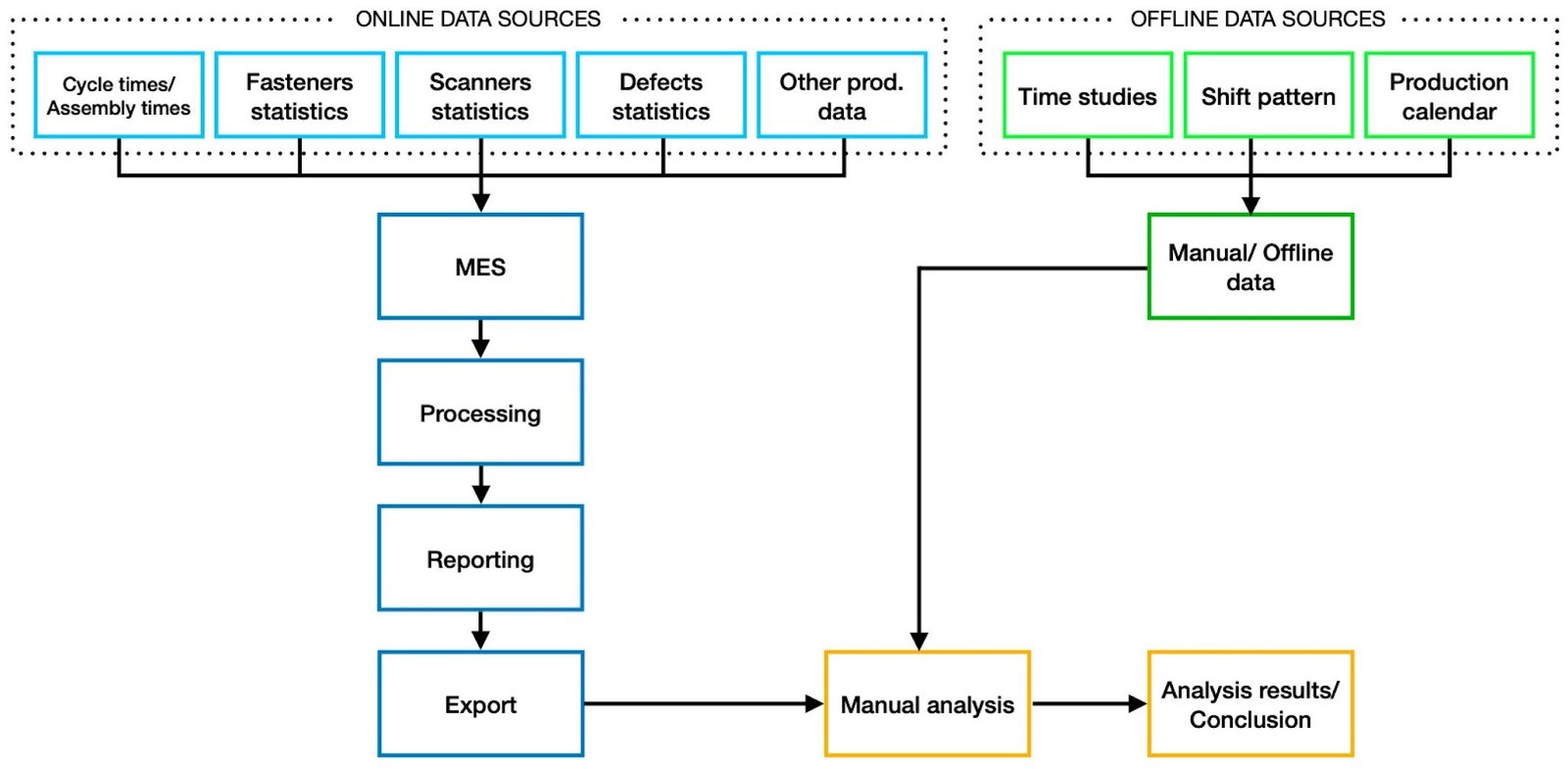
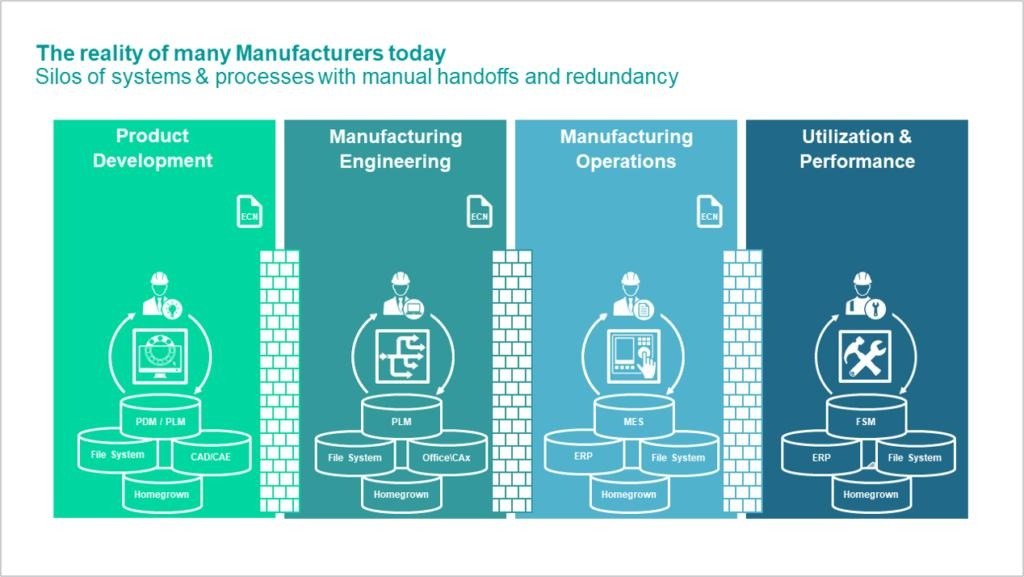
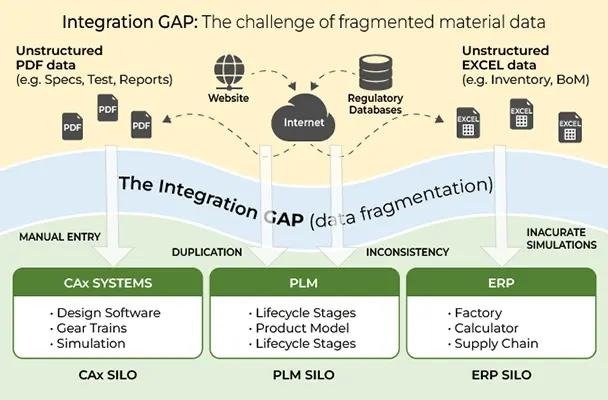
One of the most common problems is fragmented information.
For example:
- Production data may exist in an MES system
- Inventory data may be stored in ERP software
- Maintenance data may be maintained manually
- Quality records may be stored separately
When data remains isolated across departments, it becomes difficult to gain a complete view of operations.
This limits both operational visibility and AI effectiveness.
2. Poor Data Quality
Many factories collect data inconsistently.
Common issues include:
- Missing values
- Duplicate records
- Manual entry errors
- Inaccurate measurements
Poor-quality data creates unreliable analysis and reduces confidence in decision-making.
Even advanced AI models cannot generate accurate recommendations if the underlying data is flawed.
3. Lack of Real-Time Visibility
Many manufacturers still rely on end-of-shift reports or daily summaries.
By the time managers receive the information:
- Downtime has already occurred
- Quality issues have already happened
- Production losses have already accumulated
Modern manufacturing requires real-time visibility to enable proactive decision-making.
4. Legacy Equipment and Limited Connectivity

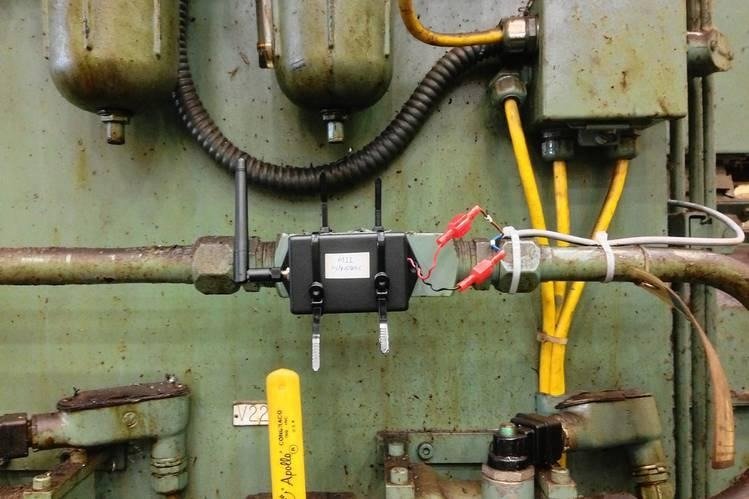

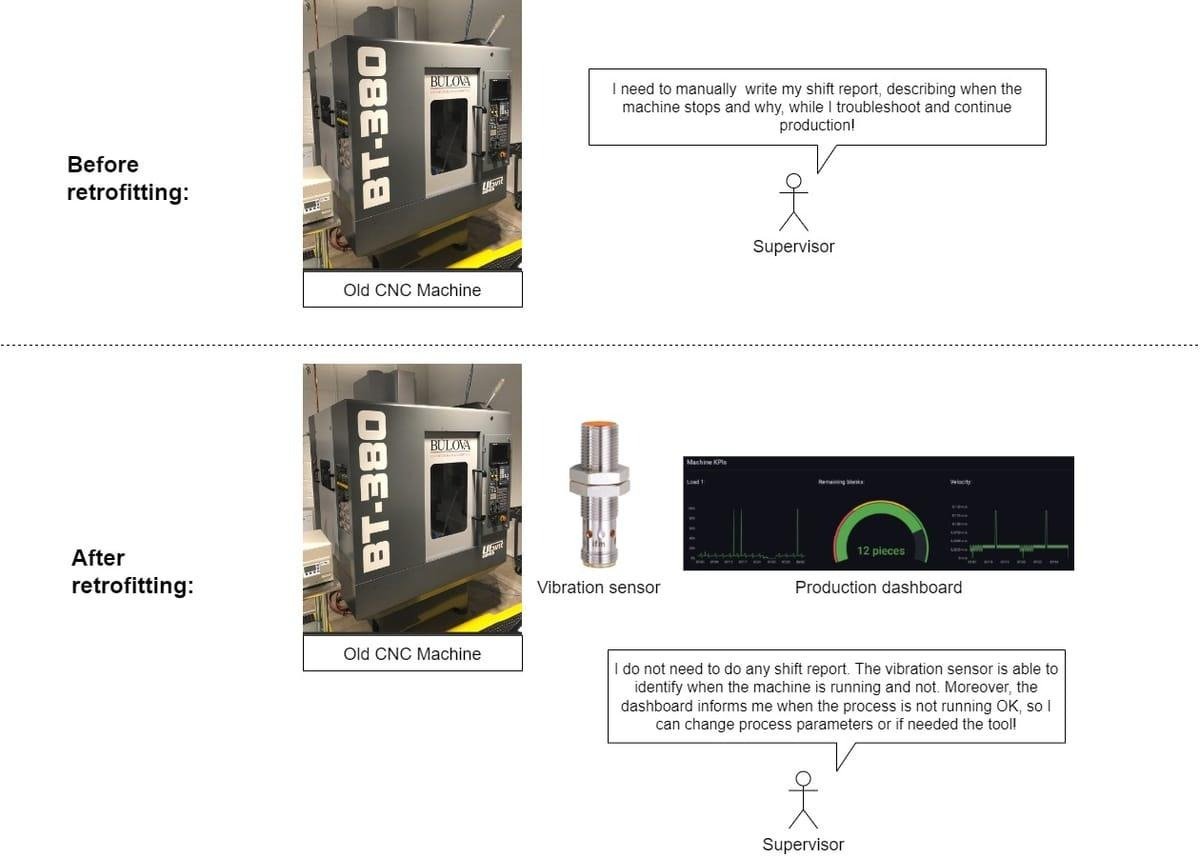



Many Indian factories operate with equipment that was never designed for modern data collection.
These machines often:
- Lack sensors
- Generate limited digital information
- Cannot connect directly to analytics platforms
As a result, valuable operational insights remain hidden.
5. Data Without Context
Collecting data is not enough.
Manufacturers also need context.
For example:
A machine temperature reading of 85°C means very little unless it is connected to:
- Machine condition
- Production output
- Maintenance history
- Environmental factors
Without context, data becomes difficult to interpret and act upon.
5 Ways Manufacturers Can Fix the Data Problem
1. Start with a Data Strategy
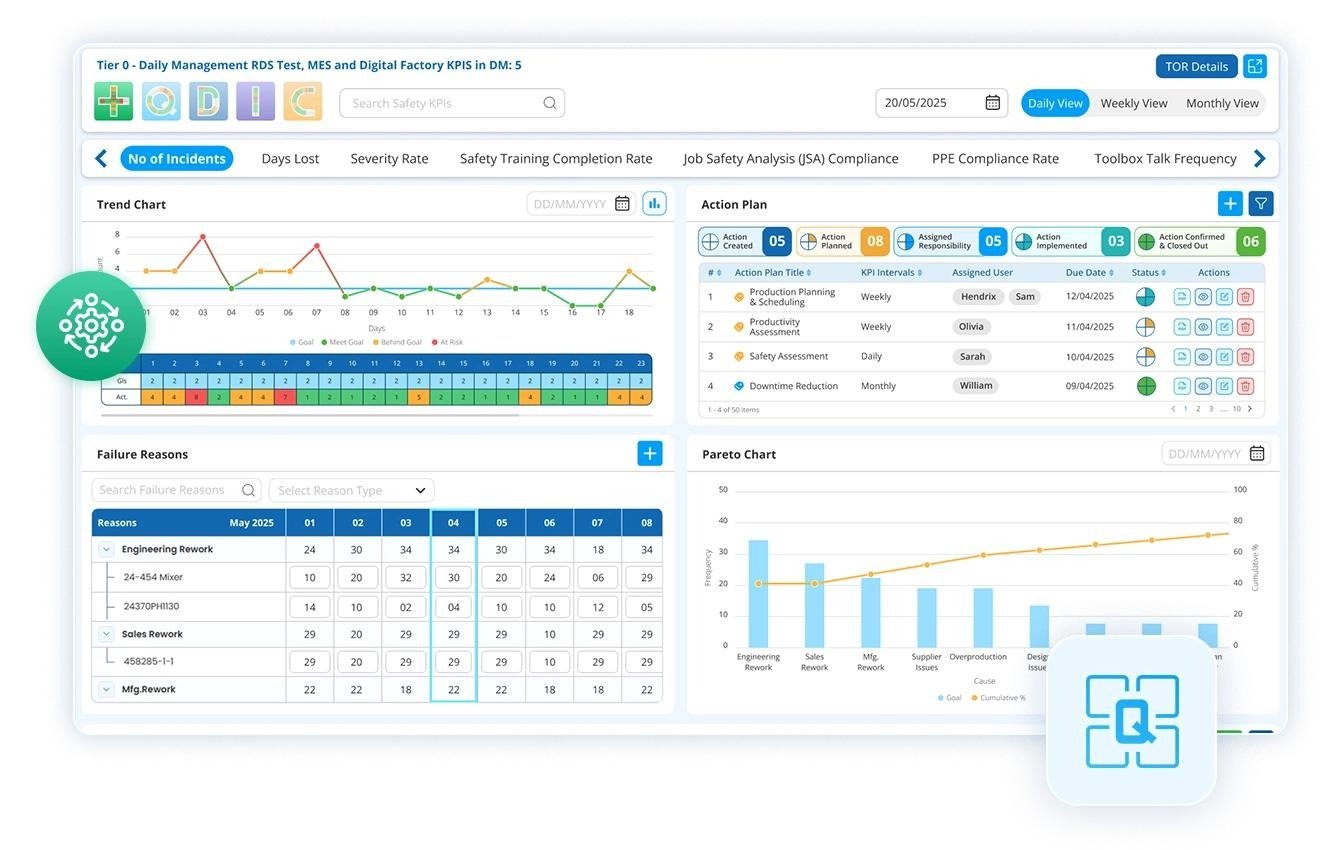



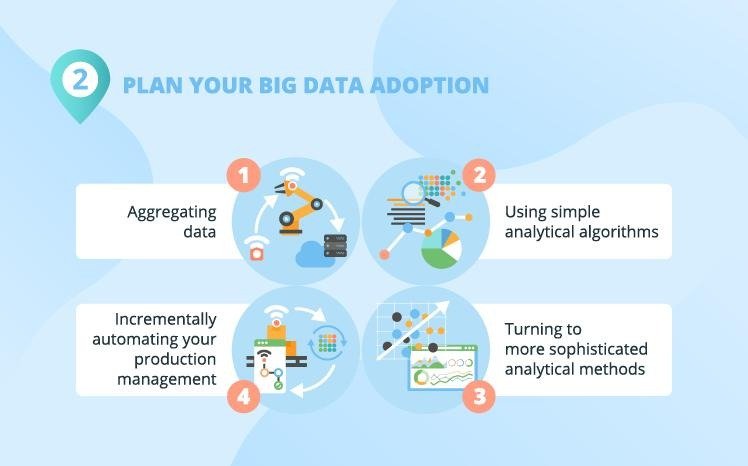

Before investing in AI, manufacturers should define:
- What data is needed
- Why it is needed
- How it will be collected
- Who will use it
A clear data strategy ensures that digital investments align with business objectives.
Instead of collecting everything, focus on collecting the data that supports operational improvement.
2. Break Down Data Silos
Manufacturers should work toward connecting information across:
- Production systems
- ERP platforms
- Quality systems
- Maintenance applications
- Supply chain software
Integrated data creates a more complete picture of operations and enables more effective analytics.
This is often the first step toward successful AI adoption.
3. Improve Data Collection at the Source
The quality of insights depends on the quality of data collection.
Manufacturers should:
- Automate data capture where possible
- Reduce manual entry
- Standardize reporting formats
- Deploy sensors on critical equipment
Capturing accurate information at the source improves reliability across the entire organization.
4. Invest in Real-Time Monitoring

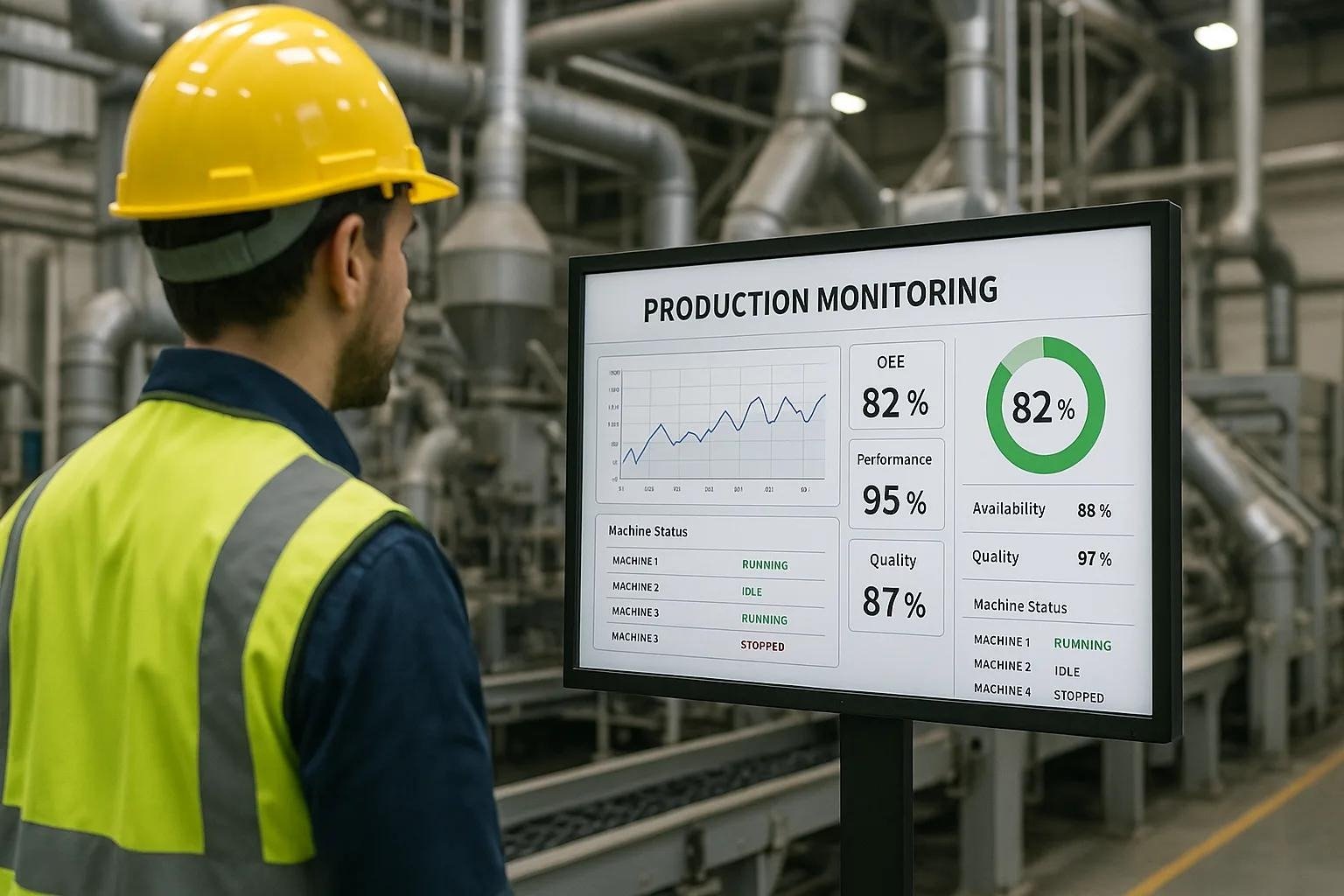
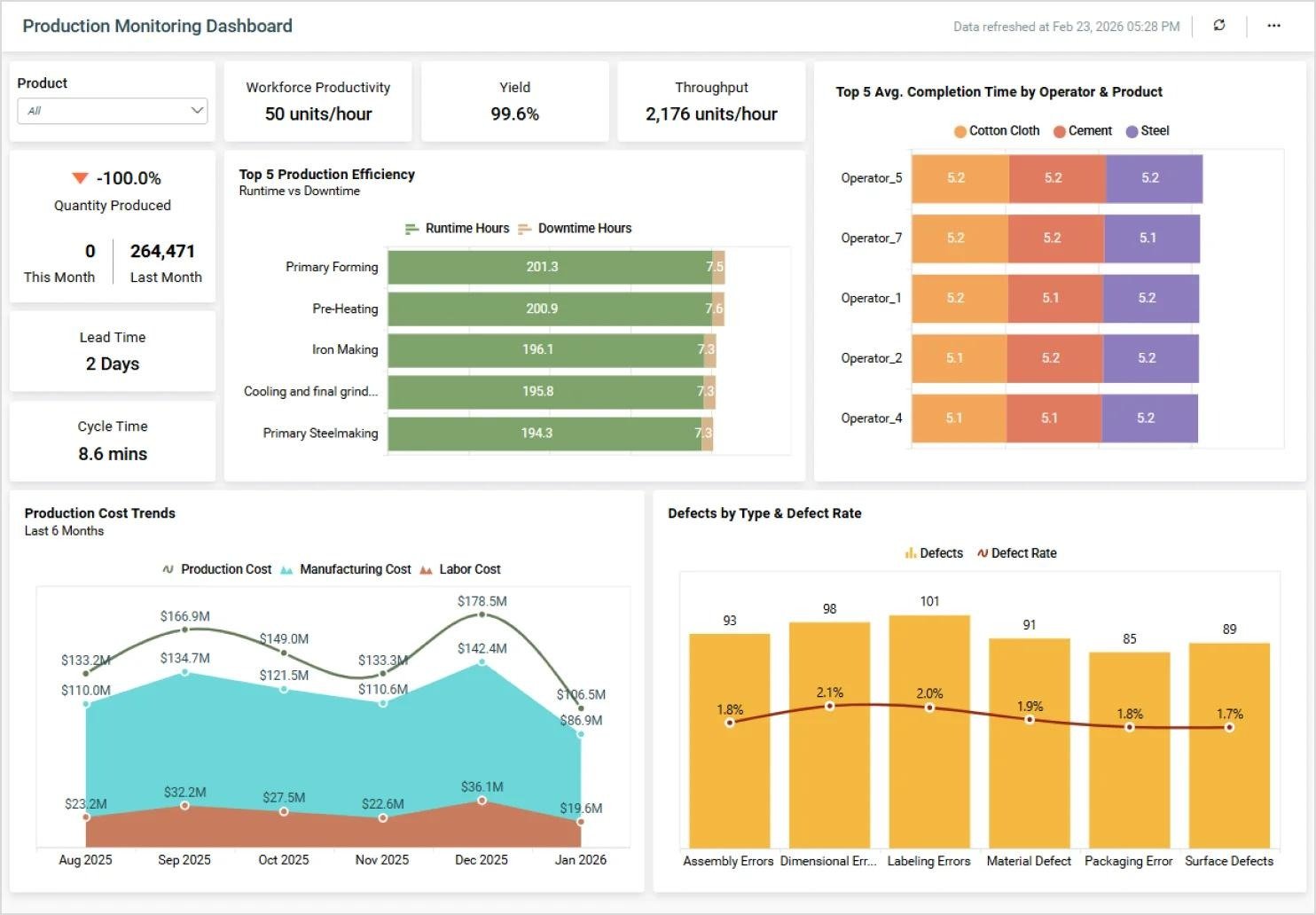
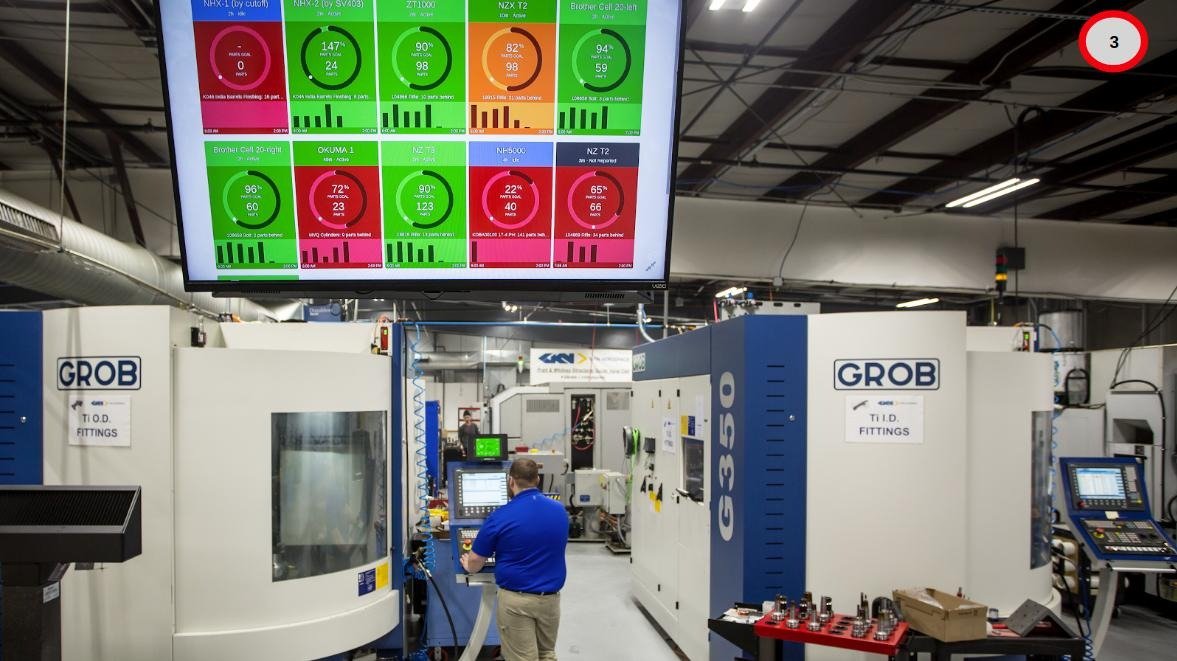

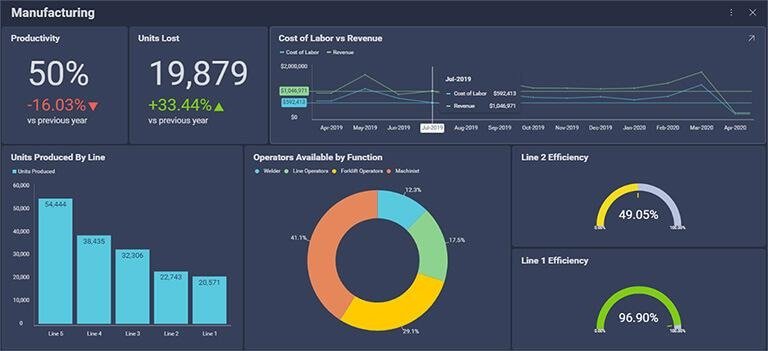
Real-time monitoring allows manufacturers to move from reactive management to proactive operations.
Benefits include:
- Faster problem identification
- Improved response times
- Better operational control
- Reduced downtime and losses
Modern dashboards and analytics platforms make this increasingly accessible, even for MSMEs.
5. Build a Data-Driven Culture
Technology alone cannot solve data challenges.
Organizations must encourage teams to:
- Trust data
- Use data for decision-making
- Share information across departments
- Continuously improve data quality
A strong data culture ensures that information becomes a strategic asset rather than an administrative burden.
Why This Matters for AI Adoption
AI initiatives often fail because organizations attempt to deploy advanced technology on weak data foundations.
When manufacturers improve:
- Data quality
- Data accessibility
- Data integration
- Data governance
AI becomes significantly more effective.
In many cases, fixing data problems delivers immediate operational benefits even before AI is introduced.
The manAIhub Approach
At manAIhub, we believe successful AI adoption begins with solving the data challenge first.
Through collaboration between:
- Plant Leaders and CXOs
- Engineers and Quality Heads
- Data and AI Experts
- Solution Providers
- Academia and Trade Associations
manufacturers can learn practical approaches to building AI-ready operations.
Across our six focus tracks:
- Smart Maintenance
- Quality & Inspection
- Production Optimization
- Supply Chain & Planning
- Energy & Sustainability
- Workforce Augmentation
data serves as the foundation for every successful AI implementation.
Final Thought
Many manufacturers believe their biggest challenge is adopting AI.
In reality, their biggest challenge is often preparing the data needed to make AI successful.
Factories that solve the data problem today will be the ones that unlock the greatest value from AI tomorrow.
Bottom Line
The future of manufacturing will be driven by data-powered decision-making.
Manufacturers that invest in improving data quality, connectivity, visibility, and governance will create the foundation needed for operational excellence, digital transformation, and successful AI adoption.
Before asking whether your factory is ready for AI, ask a simpler question:
Is your data ready for AI?