
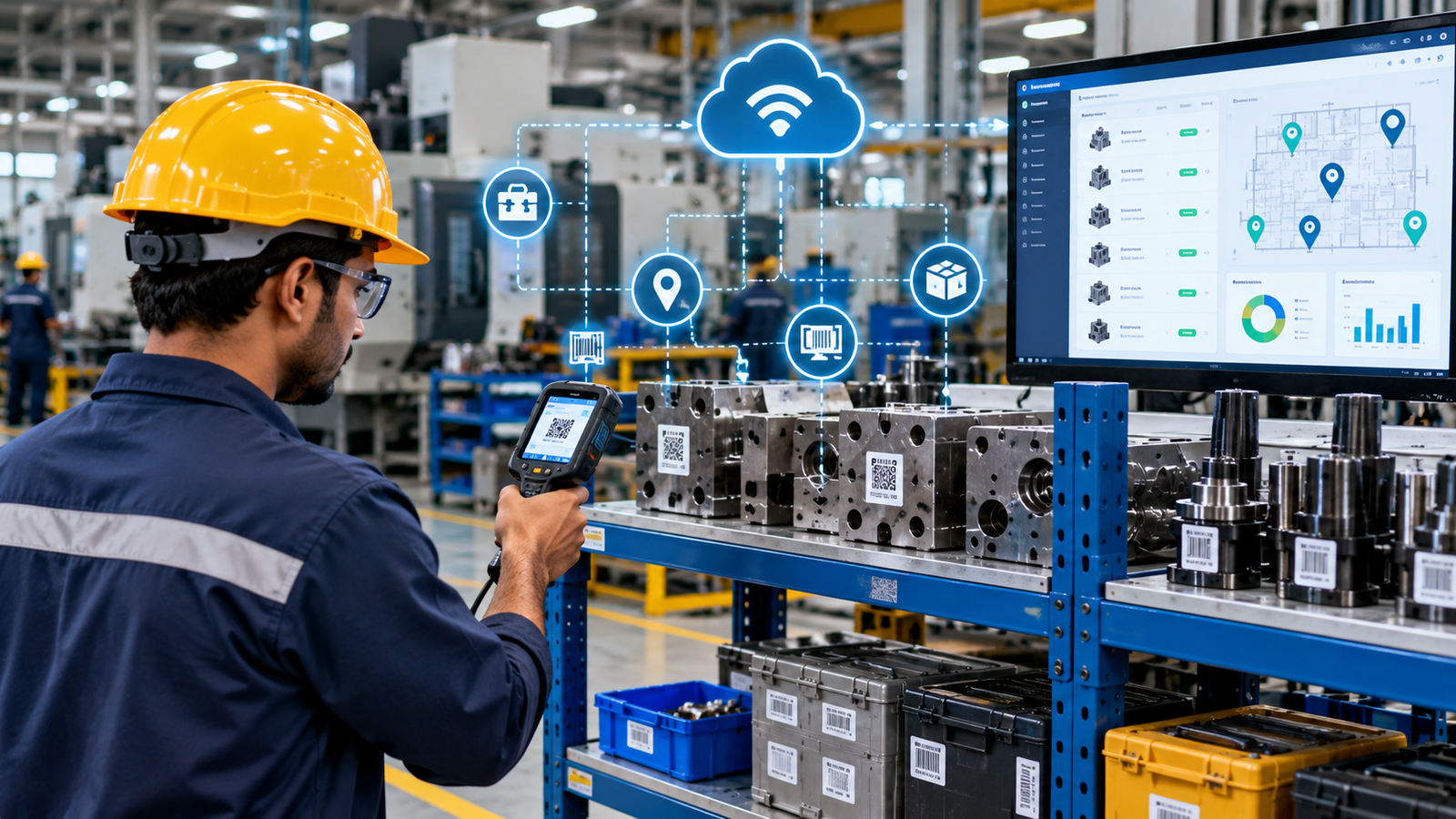
In most manufacturing plants, tools, fixtures, gauges, movable equipment, and other assets are critical for daily operations. Yet many factories struggle to keep track of where these items are, who is using them, and whether they are available when needed.
Time spent searching for tools, misplaced assets, unplanned downtime due to missing equipment, and poor utilization of expensive resources are common consequences. Manual registers and memory-based tracking methods simply cannot keep up with the complexity of modern factories.
Smart technology is helping manufacturers solve this long-standing problem by providing accurate, real-time visibility and control over tools and assets.
Here are the common difficulties in tracking tools and assets and 5 practical ways smart technology can solve them.
Common Difficulties in Tracking Tools and Assets
- Time wasted searching for tools and equipment
- Missing or misplaced assets
- Poor utilization of expensive tools and movable equipment
- Lack of accountability for tool usage and returns
- Difficulty in planning maintenance of tools and fixtures
- Manual registers that are incomplete or outdated
- No real-time visibility of asset location and status
- Higher costs due to duplicate purchases of lost or unavailable items
These issues are especially common in large plants, tool rooms, and high-mix manufacturing environments.
5 Ways Smart Technology Can Solve Tool and Asset Tracking Problems
1. Real-Time Location Tracking
IoT-based systems using RFID, Bluetooth, or other sensors provide live visibility of where tools and assets are located within the factory.
Benefits:
- Instant location information
- Significant reduction in search time
- Faster response during production needs
- Better control over high-value assets
2. Digital Check-In / Check-Out Systems
Smart tools enable digital logging of who takes an asset, when it is taken, and when it is returned.
Impact:
- Clear accountability
- Reduced loss and misplacement
- Better discipline in tool management
- Historical usage records for analysis
3. Utilisation and Availability Monitoring
Intelligent platforms track how often assets are used and highlight underutilised or over-utilised items.
Advantages:
- Improved asset utilization
- Data-driven decisions on new purchases
- Identification of bottlenecks caused by shared tools
- Better planning of tool availability across shifts
4. Maintenance and Calibration Tracking
Smart systems maintain digital records of maintenance schedules, calibration status, and service history for tools and equipment.
Results:
- Timely maintenance and calibration
- Reduced risk of using non-conforming tools
- Higher reliability of measurement and production tools
- Easier compliance during audits
5. Alerts and Analytics for Better Asset Management
Advanced systems send alerts for missing assets, overdue returns, or upcoming maintenance, and provide analytical insights for continuous improvement.
Long-term Value:
- Proactive asset management
- Lower losses and duplicate purchases
- Stronger overall equipment and tool discipline
- Sustainable reduction in operational inefficiencies
Conclusion
Difficulty in tracking tools and assets may appear to be a minor operational issue, but its cumulative impact on productivity, cost, and morale is significant. Smart technology turns this challenge into a manageable and transparent process.
manAIhub supports Plant Leaders, Maintenance Heads, and Operations teams with practical insights and solutions to improve tool and asset management across manufacturing operations.
Ready to Solve Tool and Asset Tracking Issues?
Start by identifying the most frequently misplaced or searched-for items in your plant. Then explore smart tracking solutions that can bring real-time visibility and control.
What is the biggest challenge you face in tracking tools or assets in your factory?
Share your experience in the comments or connect with other manufacturing professionals on manAIhub.