
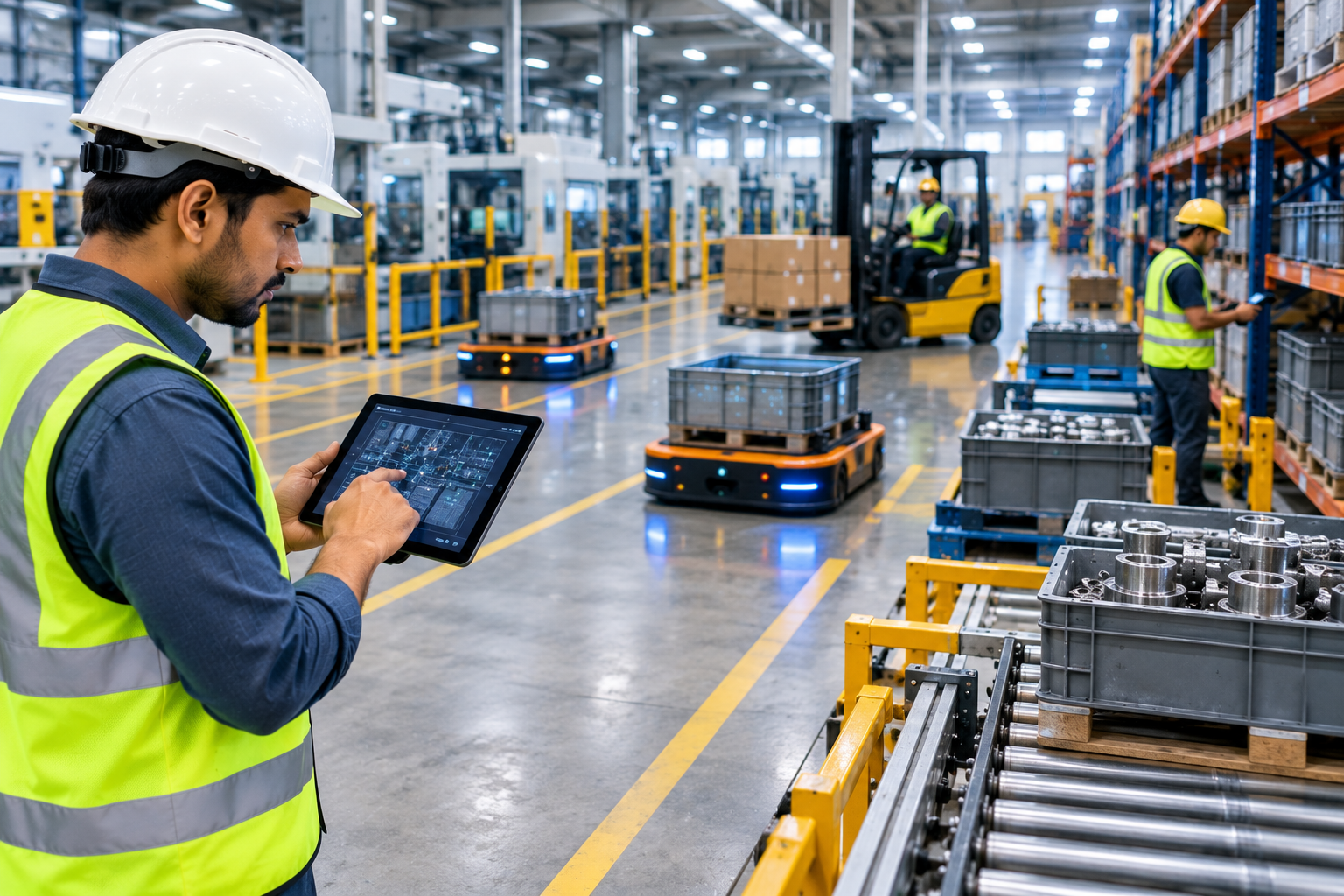
Internal logistics — the movement of materials, components, and finished goods within the factory — plays a critical role in overall productivity. Yet in many Indian plants, internal logistics remains inefficient, manual, and reactive. Delays in material movement, incorrect deliveries to production lines, excess handling, and poor coordination often lead to idle machines, lost production time, and higher operating costs.
When materials do not reach the right place at the right time, even the best production plans fail. Improving internal logistics is therefore essential for smooth and efficient operations.
Predictive tools and intelligent systems are helping factories bring visibility, accuracy, and speed into material movement inside the plant.
Here are the common internal logistics problems and 5 practical ways predictive tools can fix them.
Common Internal Logistics Problems in Factories
- Delayed delivery of materials to production lines
- Incorrect or incomplete kits sent to the shop floor
- Excess material handling and unnecessary movement
- Poor visibility of material location inside the plant
- Manual coordination between stores, production, and logistics teams
- Congestion in aisles and storage areas
- High dependency on paper-based requests and verbal communication
- Frequent line stoppages due to missing components
These issues are common in plants with complex layouts, high product variety, or limited digital tracking.
5 Ways Predictive Tools Can Fix Internal Logistics Problems
1. Real-Time Material Tracking and Visibility
IoT sensors, bar codes, RFID, and intelligent platforms provide live visibility of material location and status across the factory.
Benefits:
- Instant knowledge of where materials are
- Faster response to production needs
- Reduced time spent searching for items
- Better control over work-in-progress (WIP)
2. Predictive Material Requirement Planning
Smart systems analyze production schedules and consumption patterns to predict material needs in advance.
Impact:
- Materials arrive at the line just in time
- Reduced shortages and excess inventory on the shop floor
- Fewer emergency material requests
- Smoother production flow
3. Intelligent Routing and Movement Optimization
Predictive tools optimize the routes and timing of material movement within the plant, whether handled by people, trolleys, or automated systems.
Advantages:
- Shorter travel distances and reduced handling
- Less congestion in pathways
- Higher efficiency of internal logistics resources
- Lower risk of damage during movement
4. Automated Alerts and Exception Management
Intelligent systems raise alerts when materials are delayed, missing, or at risk of causing a line stoppage.
Results:
- Proactive action instead of reactive firefighting
- Reduced machine idle time
- Faster coordination between teams
- Higher overall equipment effectiveness (OEE)
5. Data-Driven Continuous Improvement of Layout and Processes
By analyzing material flow data, predictive tools identify bottlenecks, unnecessary movements, and layout inefficiencies.
Long-term Value:
- Better factory layout decisions
- Streamlined internal logistics processes
- Sustainable reduction in material handling costs
- Improved productivity across the plant
Conclusion
Internal logistics is often an invisible constraint on factory performance. When material movement is slow or unreliable, production suffers. Predictive tools help manufacturers bring discipline, visibility, and intelligence into internal logistics, resulting in smoother operations and higher productivity.
manAIhub supports Plant Leaders, Production Managers, and Supply Chain teams with practical solutions under the Production Optimization and Supply Chain & Planning tracks to improve internal material flow.
Ready to Fix Internal Logistics in Your Factory?
Start by mapping the most frequent material delays and movement inefficiencies on your shop floor. Then explore predictive tools that can address those specific pain points.
What is the biggest internal logistics challenge in your plant right now?
Share your experience in the comments or connect with other manufacturing professionals on manAIhub.