
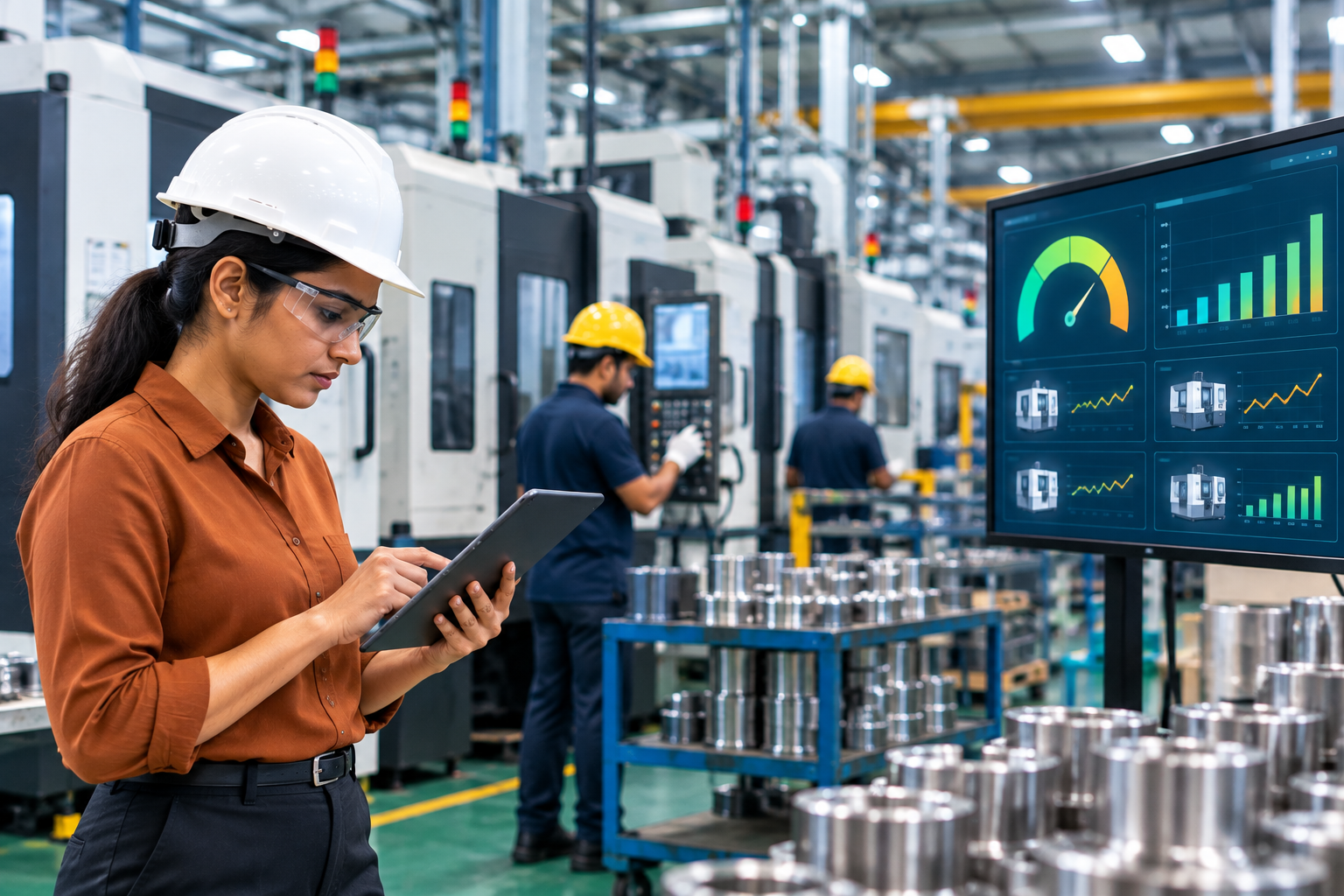
Low machine utilization is a hidden but significant problem in many Indian factories. Machines are expensive assets, yet a large percentage of their available time is often lost to idle periods, changeovers, minor stoppages, waiting for materials, or unplanned breakdowns.
When machines are underutilized, the plant’s capacity remains locked, production costs rise, and the return on capital investment suffers. Improving machine utilization is one of the fastest ways to increase output without major new capital expenditure.
Smart technology is helping manufacturers gain real-time visibility into machine performance and systematically eliminate the reasons for low utilization.
Here are the common causes of low machine utilization and 5 practical ways smart technology can increase it.
Common Causes of Low Machine Utilization
High idle time due to material or manpower shortages
Frequent minor stoppages and speed losses
Long changeover and setup times
Unplanned breakdowns
Poor production scheduling and line balancing
Lack of real-time visibility into machine status
Inefficient coordination between production, maintenance, and stores
Operators running machines below optimal speed
These issues are common in plants that still rely on manual monitoring and experience-based decisions.
5 Ways Smart Technology Can Increase Machine Utilization
1. Real-Time Machine Monitoring and OEE Tracking
IoT sensors and intelligent platforms continuously track machine status, output, and losses, providing live OEE (Overall Equipment Effectiveness) data.
Benefits:
Instant visibility into availability, performance, and quality losses
Accurate identification of the biggest utilization killers
Data-driven daily management meetings
Higher accountability across shifts
2. Reduced Unplanned Downtime through Predictive Maintenance
Smart systems detect early signs of machine deterioration and help schedule maintenance before failure occurs.
Impact:
Higher machine availability
Fewer unexpected stoppages
Better planning of maintenance windows
Improved overall equipment reliability
3. Intelligent Production Scheduling and Load Balancing
Advanced planning tools create optimized schedules that maximize machine loading while considering constraints.
Advantages:
Reduced idle time between jobs
Better balancing of workload across machines
Higher throughput from existing assets
Improved adherence to production plans
4. Faster Changeovers with Digital Guidance
Smart tools provide digital work instructions, checklists, and real-time support to standardize and shorten changeover processes.
Results:
Significant reduction in setup time
More consistent changeover performance
Higher availability for actual production
Better support for high-mix manufacturing
5. Automated Alerts and Rapid Response Systems
Intelligent systems instantly notify supervisors and support teams when a machine is idle or running below expected performance.
Long-term Value:
Faster resolution of stoppages
Reduced waiting time for materials, tools, or maintenance
Continuous improvement in machine utilization
Higher overall plant productivity
Conclusion
Low machine utilization is rarely caused by a single issue — it is usually the result of multiple small losses that add up over time. Smart technology helps manufacturers measure these losses accurately and eliminate them systematically, unlocking hidden capacity from existing machines.
manAIhub supports Plant Leaders, Production Heads, and Maintenance teams with practical insights and solutions under the Production Optimization and Smart Maintenance tracks to improve machine utilization in Indian factories.
Ready to Increase Machine Utilization in Your Plant?
Start by measuring the current utilization and OEE of your critical machines. Then identify the top reasons for lost time and explore smart tools that can address them.
What is the biggest reason for low machine utilization in your factory?
Share your experience in the comments or connect with other manufacturing professionals on manAIhub.
Stay tuned for more practical blogs across all six thematic tracks.