Low production efficiency continues to be a major challenge for many Indian manufacturing plants. Despite having capable workforce and decent machinery, a large number of factories operate well below their true potential. Low Overall Equipment Effectiveness (OEE), frequent bottlenecks, high idle time, and inconsistent output are common issues. In today’s competitive environment — with rising customer expectations, pressure on margins, and increasing global competition — improving production efficiency is no longer optional. It is a business necessity.
Intelligent systems powered by AI, IoT, data analytics, and real-time monitoring are helping progressive Indian manufacturers significantly improve their production performance under the Production Optimization track. Here are the main reasons behind low production efficiency and 5 practical steps intelligent systems can take to improve it.
Common Reasons for Low Production Efficiency in Indian Plants
● High machine idle time and unplanned stoppages
● Poor coordination between production, maintenance, and quality teams
● Manual data collection and delayed decision-making
● Inefficient production scheduling and line balancing
● Lack of real-time visibility into shop floor performance
● Skill gaps and inconsistent operator performance
● Frequent quality-related interruptions and rework
● Sub-optimal machine speeds and process parameters
These problems are especially visible in plants that still rely heavily on paper-based systems
and experience-based decision making.
5 Steps Intelligent Systems Can Improve Production Efficiency
- Real-Time Production Monitoring and Visibility
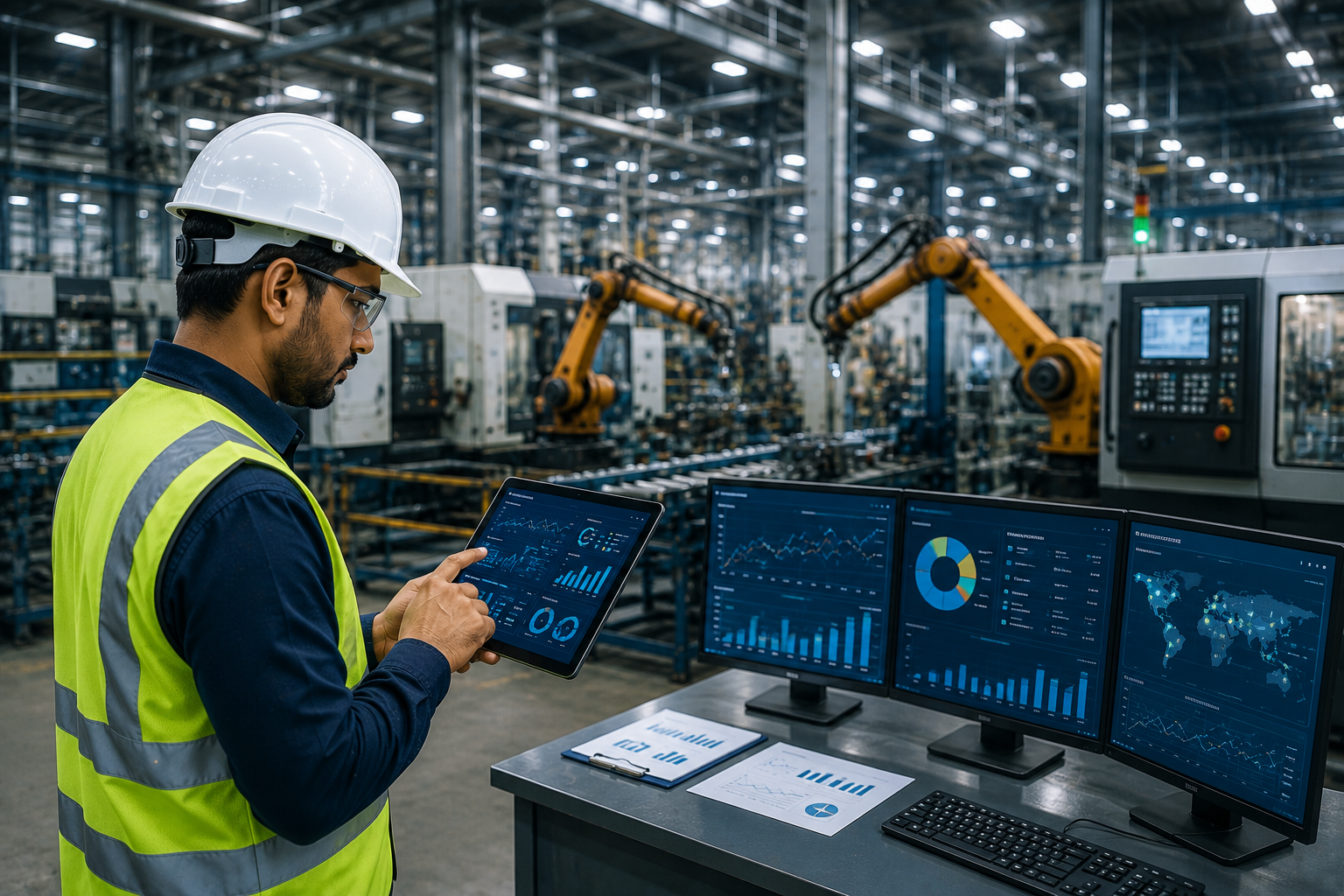
Intelligent systems use IoT sensors and shop floor software to capture live data on machine status, output, downtime reasons, and cycle times. This information is displayed on dashboards that supervisors and Plant Heads can access anytime.
Benefits:
● Instant visibility into what is happening on the shop floor
● Faster identification of bottlenecks and stoppages
● Data-driven daily production meetings instead of guesswork
● Improved accountability across shifts
- Intelligent Production Scheduling and Line Balancing
Traditional scheduling often fails to consider real machine availability, skill levels, and material readiness. AI-based scheduling tools create optimised production plans by analysing multiple constraints simultaneously.
Impact:
● Better utilisation of machines and manpower
● Reduced changeover and waiting time
● Improved on-time delivery performance
● Higher throughput without adding new machines
- AI-Powered Process Parameter Optimisation
Many machines run at settings that are “safe” but not optimal. Intelligent systems analyse historical and real-time data to recommend the best process parameters for speed, quality, and energy use.
Results:
● Higher production rates without compromising quality
● Reduced process variation
● Lower energy consumption per unit produced
● Continuous improvement in process capability
- Automated Downtime Tracking and Root Cause Analysis
Instead of relying on operators to manually write downtime reasons, intelligent systems automatically capture stoppages and use AI to categorise and analyse them.
Advantages:
● Accurate and honest downtime data
● Quick identification of recurring problems
● Focused improvement projects with measurable impact
● Significant reduction in minor stoppages over time
- Operator Performance Support and Digital Assistance
Intelligent tools provide real-time guidance, digital work instructions, and performance feedback to operators. This helps reduce skill-related variations and improves consistency across shifts.
Key Benefits:
● Faster onboarding of new operators
● Reduced human errors
● Higher and more consistent output
● Better engagement through transparent performance data
Conclusion
Low production efficiency is not a permanent limitation — it is a solvable problem. By adopting intelligent systems, Indian plants can unlock hidden capacity, reduce waste, and improve competitiveness without always needing heavy capital investment in new machinery. manAIhub supports Plant Leaders, Production Heads, and Engineers in this journey through practical insights, proven use cases, and connections to the right solutions under the Production Optimization track.
Ready to Improve Your Plant’s Efficiency?
Start by measuring your current OEE and identifying the biggest sources of loss. Then explore intelligent systems that can deliver quick and sustainable improvements.
What is the biggest reason for low production efficiency in your plant?
Share your challenges in the comments or join the manAIhub community to learn from other manufacturing leaders.