
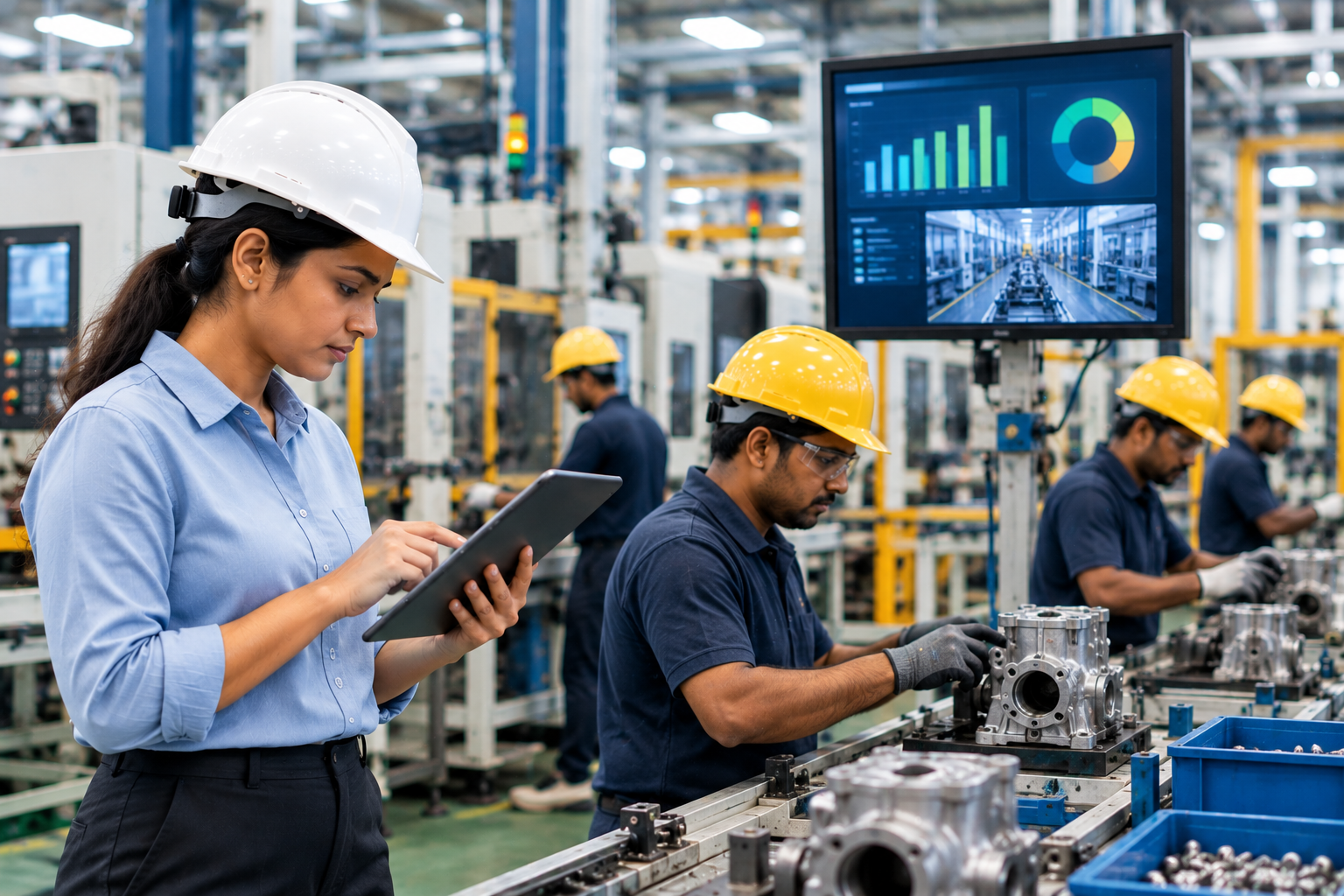
Worker productivity remains a major challenge in many Indian factories. Despite a large and hardworking workforce, output per worker is often lower than global benchmarks. This gap affects competitiveness, increases costs, and limits the ability of plants to scale efficiently.
Several factors contribute to low productivity — skill gaps, manual processes, lack of real-time guidance, poor workplace design, and limited use of digital tools. In today’s competitive environment, simply adding more workers is not a sustainable solution. Improving the productivity of the existing workforce is far more effective.
Smart technology is playing a growing role in Workforce Augmentation by helping workers perform better, faster, and with fewer errors.
Here are the common reasons for low worker productivity and 5 practical ways smart technology can improve it.
Common Reasons for Low Worker Productivity in Indian Factories
- Limited digital skills and comfort with new tools
- Manual and paper-based processes that slow down work
- Inconsistent training and knowledge transfer
- Lack of real-time guidance on the job
- High fatigue and repetitive strain in certain tasks
- Poor visibility of individual and team performance
- Frequent interruptions due to machine issues or material shortages
- Low engagement and unclear performance expectations
These challenges are especially visible in plants that have not yet adopted digital tools on the shop floor.
5 Ways Smart Technology Can Improve Worker Productivity
1. Digital Work Instructions and Real-Time Guidance
Smart systems replace paper instructions with digital, visual, and step-by-step guidance available on tablets, screens, or smart glasses.
Benefits:
- Faster and more accurate task execution
- Reduced dependency on supervisors for every doubt
- Lower error rates, especially for new or complex jobs
- Consistent performance across shifts and operators
2. AI-Powered Skill Training and Upskilling
Intelligent learning platforms deliver personalised, bite-sized training in local languages and track progress automatically.
Impact:
- Faster skill development
- Reduced training time and cost
- Better readiness for new machines and processes
- Continuous learning instead of one-time training programs
3. Performance Visibility and Feedback Systems
Smart dashboards provide real-time feedback to workers and supervisors on output, quality, and efficiency.
Advantages:
- Clear visibility of individual and team performance
- Healthy competition and motivation
- Early identification of support needed
- Data-driven performance discussions instead of subjective feedback
4. Automation of Repetitive and Low-Value Tasks
Collaborative robots, automated material handling, and intelligent tools take over repetitive or physically demanding work.
Results:
- Workers focus on higher-value tasks
- Reduced fatigue and injury risk
- Higher overall output
- Better job satisfaction
5. Connected Workforce and Issue Escalation Tools
Mobile apps and smart systems allow workers to quickly report problems, request support, and receive updates.
Long-term Value:
- Faster resolution of production issues
- Less idle time waiting for help
- Stronger communication between shop floor and support teams
- Higher sense of ownership and engagement among workers
Conclusion
Improving worker productivity is not about pushing people harder — it is about giving them better tools, clearer guidance, and continuous support. Smart technology enables Indian factories to get more value from their existing workforce while creating a safer and more engaging work environment.
manAIhub supports Plant Leaders, HR teams, and Operations Heads under the Workforce Augmentation track with practical insights and solutions that help improve productivity in real Indian factory conditions.
Ready to Improve Worker Productivity in Your Plant?
Start by identifying the biggest time losses or skill gaps on your shop floor. Then explore smart tools that can address those specific issues.
What is the biggest factor affecting worker productivity in your factory?
Share your thoughts in the comments or connect with other manufacturing professionals on manAIhub.