
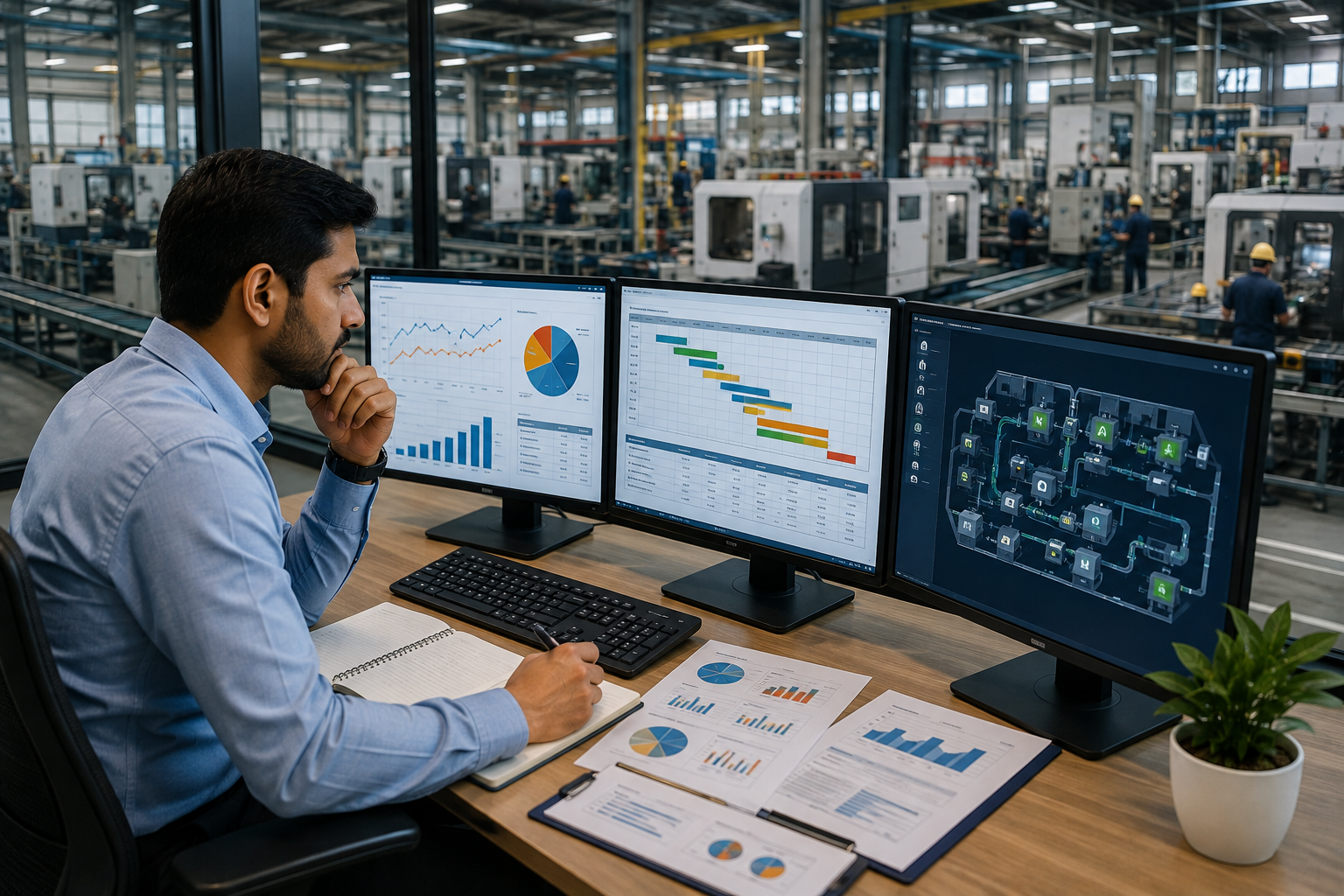
Poor production planning is one of the hidden reasons why many Indian factories struggle with low efficiency, missed delivery dates, high inventory, and frequent firefighting. Even when machines and workers are available, weak planning leads to idle time, last-minute changes, material shortages, and overloaded production lines. In a dynamic market with fluctuating demand, festival peaks, and supply uncertainties, traditional planning methods based on spreadsheets and experience are no longer enough. Advanced analytics and AI-powered planning tools are helping manufacturers create more accurate, flexible, and realistic production plans. This topic sits at the heart of the Production Optimization and Supply Chain & Planning tracks.
Here are the common problems caused by poor production planning and 5 practical steps advanced analytics can take to fix them.
Common Problems Caused by Poor Production Planning
● Frequent schedule changes and last-minute priority shifts
● Machine and manpower idle time despite pending orders
● Material shortages or excess inventory
● Overloading of certain machines while others remain underutilised
● High overtime costs and rushed production
● Missed customer delivery commitments
● Poor coordination between sales, planning, production, and stores
● Inability to quickly adjust plans when disruptions occur
These issues are very common in plants that still rely heavily on manual planning.
5 Steps Advanced Analytics Can Fix Production Planning
- Demand-Driven and Accurate Forecasting
Advanced analytics combines historical sales data, market trends, seasonality, and external factors to create more reliable demand forecasts.
Benefits:
● Better visibility of future order patterns
● Reduced over-production and under-production
● Improved alignment between sales and production
● More stable master production schedules
- Optimised Production Scheduling
AI-based scheduling tools consider multiple constraints at the same time — machine capacity, skill availability, material readiness, changeover times, and due dates — to create realistic and efficient schedules.
Impact:
● Higher machine utilisation
● Reduced changeover and waiting time
● Better load balancing across lines and shifts
● Improved on-time delivery performance
- Real-Time Plan vs Actual Monitoring
Intelligent systems continuously compare the planned schedule with actual shop floor progress and highlight deviations immediately.
Advantages:
● Early detection of delays
● Faster corrective actions
● Reduced surprises at the end of the shift or week
● Better daily and weekly production control
- What-If Scenario Planning and Simulation
Advanced analytics allows planners to simulate different scenarios before finalising the plan (e.g., machine breakdown, urgent orders, material delays).
Results:
● More resilient production plans
● Faster decision-making during disruptions
● Reduced panic and reactive changes
● Improved confidence in planning decisions
- Integrated Planning Across Functions
Modern analytics platforms connect demand, material, capacity, and production data into one system, breaking silos between departments.
Long-term Value:
● Better coordination between planning, procurement, production, and dispatch
● Reduced material shortages and excess stock
● Higher overall plant efficiency
● Stronger responsiveness to market changes
Conclusion
Good production planning is the foundation of efficient manufacturing. When planning is weak, even the best machines and skilled workforce cannot deliver their full potential. Advanced analytics helps Indian plants move from reactive and experience-based planning to data-driven, proactive, and optimised planning. manAIhub supports Plant Leaders, Production Planners, and Operations Heads with practical insights and solutions under the Production Optimization and Supply Chain & Planning tracks.
Ready to Improve Your Production Planning?
Start by reviewing how much time your team spends on firefighting versus proactive planning. Then explore advanced analytics tools that can bring accuracy and agility into your scheduling process.
What is the biggest planning challenge in your plant right now?
Share your experience in the comments or connect with other manufacturing professionals on manAIhub.