India’s manufacturing sector is growing rapidly, but a significant skill gap is holding it back. Despite a large workforce, many plants struggle to find workers who can operate modern machines, use digital tools, interpret data, or maintain smart systems.
According to industry reports, the skill shortage affects productivity, quality, safety, and the speed of digital transformation. Traditional training methods are often too slow, expensive, and not effective for today’s fast-changing technology.
This is where intelligent tools powered by AI, AR/VR, and adaptive learning platforms are making a big difference. They enable faster, cheaper, and more effective worker training – especially under the Workforce Augmentation track.
Major Skill Gaps in Indian Manufacturing
- Low digital literacy and comfort with new technologies
- Operating CNC machines, robots, and smart equipment
- Predictive maintenance and data-driven decision making
- Quality inspection using AI tools
- Understanding Industry 4.0 concepts
- Problem-solving and adapting to changing processes
These gaps are particularly challenging for MSMEs and older workers.
5 Practical Ways Intelligent Tools Can Train Workers
1. AI-Powered Personalized Learning Platforms
Every worker learns at a different pace. Intelligent platforms assess current skill levels and create customized training paths.
Benefits:
- Adaptive modules that adjust difficulty based on performance
- Bite-sized lessons that fit into shift breaks
- Progress tracking with clear milestones
Workers can learn at their own speed without feeling left behind.
2. Augmented Reality (AR) and Virtual Reality (VR) Training
AR/VR allows workers to practice complex tasks in a safe, simulated environment.
Practical Applications:
- Assembly and disassembly of machines without risking actual equipment
- Safety training for hazardous scenarios
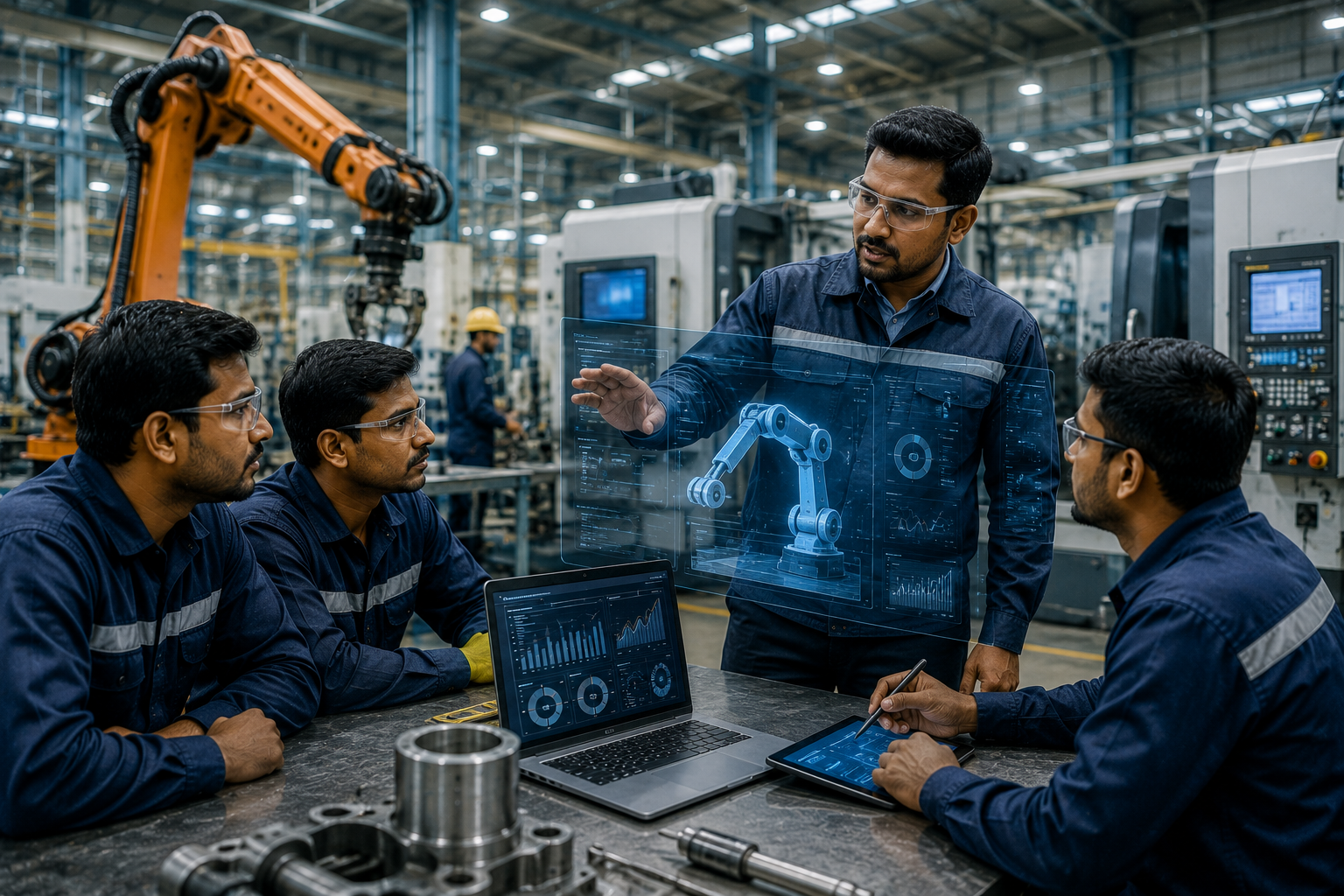
- Guided step-by-step maintenance procedures overlaid on real machines via tablets or smart glasses
This method dramatically reduces training time and errors.
3. Real-Time On-the-Job Intelligent Guidance
AI assistants and digital work instructions provide instant help directly on the shop floor.
How it works:
- Chatbots or voice-enabled systems answer questions in local languages
- Smart glasses or mobile apps show visual instructions
- Real-time alerts and suggestions while performing tasks
This “learn while doing” approach is highly effective for shop floor workers.
4. Digital Twins and Simulation-Based Training
Digital twins create virtual replicas of machines and production lines for risk-free practice.
Advantages:
- Train on rare or critical scenarios (machine breakdowns, quality defects)
- Experiment with process changes without affecting actual production
- Build confidence before working on live systems
5. Automated Skill Assessment and Continuous Upskilling
Intelligent systems continuously evaluate worker performance and recommend next learning steps.
Key Features:
- Automatic certification and skill mapping
- Personalized upskilling recommendations
- Gamification elements to keep workers motivated
- Data for HR and Plant Heads to plan workforce development
The Way Forward
Bridging skill gaps is essential for Indian manufacturing to achieve global competitiveness and successfully adopt AI across all six tracks – from Smart Maintenance to Workforce Augmentation.
Intelligent training tools make learning faster, more engaging, and directly linked to shop floor performance. Companies that invest in these solutions see higher employee retention, better productivity, and smoother technology adoption.
manAIhub is built to help Indian manufacturers tackle this challenge with practical insights, success stories, and connections to the right solutions and experts.
Ready to Bridge the Skill Gap?
Start small – pick one department or one critical skill and explore intelligent training tools.
What is the biggest skill challenge in your plant?
Share your experiences in the comments or join the manAIhub community to learn from other manufacturing leaders.