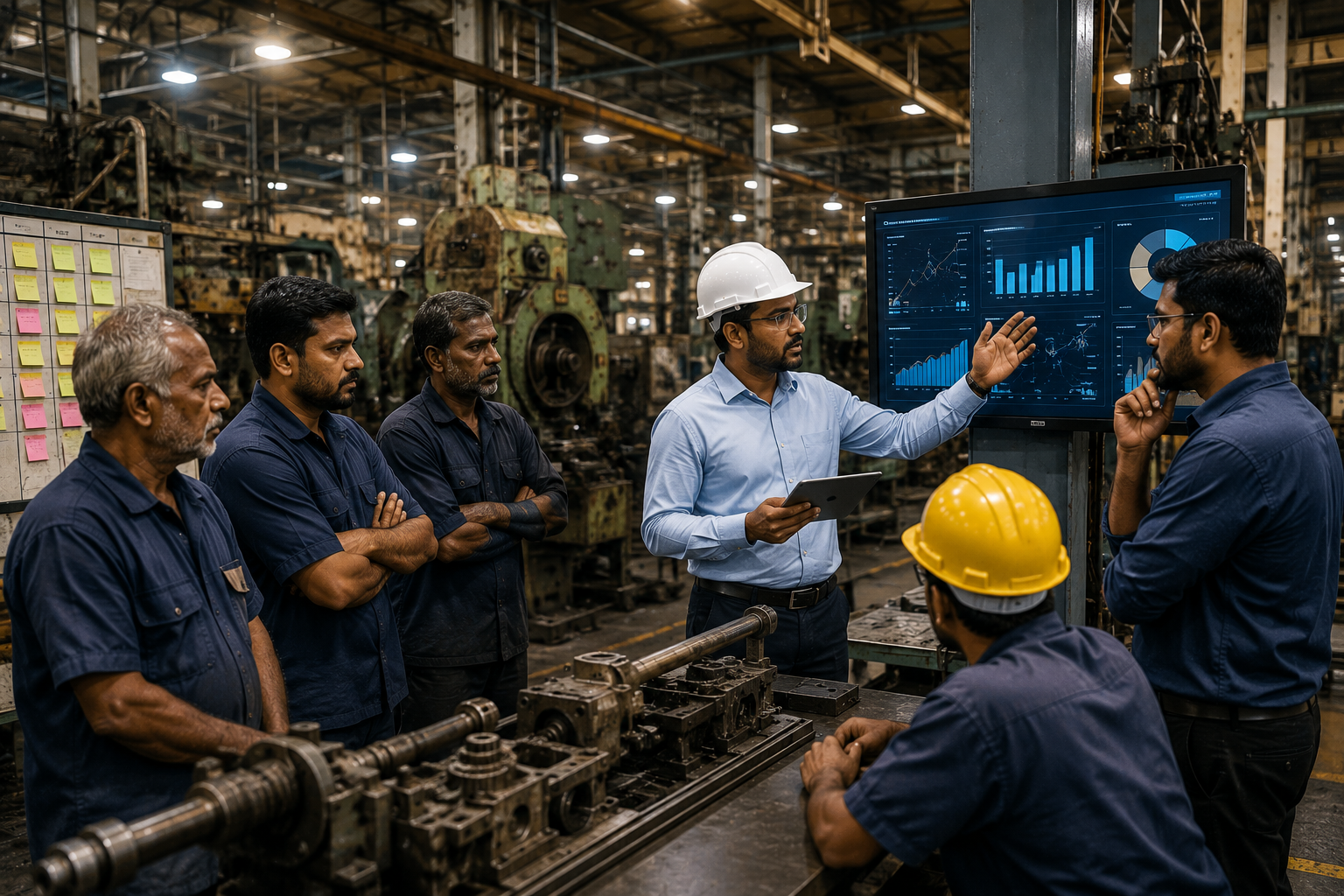
Many Indian manufacturing plants, especially older ones established decades ago, face significant resistance when introducing new technologies, processes, or AI initiatives. While the need for modernization is clear, the journey is often slow and painful.
Legacy systems, deep-rooted habits, multi-generational workforce, and fear of the unknown make change particularly difficult in traditional factories. Understanding why change is hard is the first step toward managing it effectively.
Here’s why resistance is common in old factories and 5 practical steps Plant Leaders and CXOs can take to manage change better.
Why Change is Hard in Old Factories
- Strong attachment to “the way we have always done it”
- Fear of job loss or reduced importance among workers
- Low digital literacy and discomfort with new tools
- Legacy equipment that is difficult to integrate with modern systems
- Lack of trust between management and shop floor
- Insufficient communication and involvement of employees
- Past failed initiatives that created skepticism
These challenges are very common in Indian manufacturing and can derail even well-intentioned digital transformation projects.
5 Steps to Manage Change Better
1. Communicate the “Why” Clearly and Honestly
People resist what they don’t understand.
Do this:
- Explain the business reasons behind the change (competition, customer demands, survival)
- Be transparent about potential impacts – both challenges and benefits
- Use simple language and local examples instead of corporate jargon
- Communicate consistently through multiple channels (town halls, shop floor meetings, visual boards)
2. Involve Employees Early and Genuinely
Resistance decreases when people feel they are part of the change, not victims of it.
Effective Actions:
- Include shop floor workers, supervisors, and engineers in planning and decision-making
- Listen to their concerns and incorporate valid feedback
- Identify and empower internal change champions from within the existing team
3. Start Small and Create Quick Visible Wins
Big bang changes overwhelm old factories.
Strategy:
- Begin with pilot projects on one line or one process
- Choose initiatives that solve immediate pain points
- Celebrate and publicly recognize early successes
- Use results to build momentum and credibility
4. Provide Proper Training and Support
Never assume people will figure it out on their own.
Best Practices:
- Offer hands-on training in local languages with simple materials
- Provide ongoing support (mentors, helpdesks, real-time guidance tools)
- Address skill gaps through intelligent training solutions (as covered in previous blogs)
- Make learning a continuous process, not a one-time event
5. Lead from the Front and Align Incentives
Change must be visibly supported by leadership.
Key Actions:
- Plant Head and senior leaders should actively participate and demonstrate new ways of working
- Update performance metrics and incentives to encourage desired behaviors
- Recognize and reward teams and individuals who embrace change
- Be patient but persistent – cultural change takes time
Conclusion
Change in old factories is never easy, but it is possible – and increasingly necessary for survival and growth. By addressing human and cultural aspects alongside technology, Indian manufacturers can successfully implement AI and digital initiatives across Smart Maintenance, Quality & Inspection, Production Optimization, and other key areas.
manAIhub exists to support Plant Leaders, Engineers, and teams through this transformation journey with practical guidance, real Indian case studies, and a community of like-minded professionals.
Ready to Lead Change Effectively?
Successful transformation starts with better change management.
What is the biggest resistance you are facing during change in your plant?
Share your challenges in the comments or connect with peers and experts on manAIhub.